First steps · 6 min read
When should you buy first shoes?
The short answer: when your child starts walking outdoors, on hard and cold ground. Indoors, bare feet are usually enough.
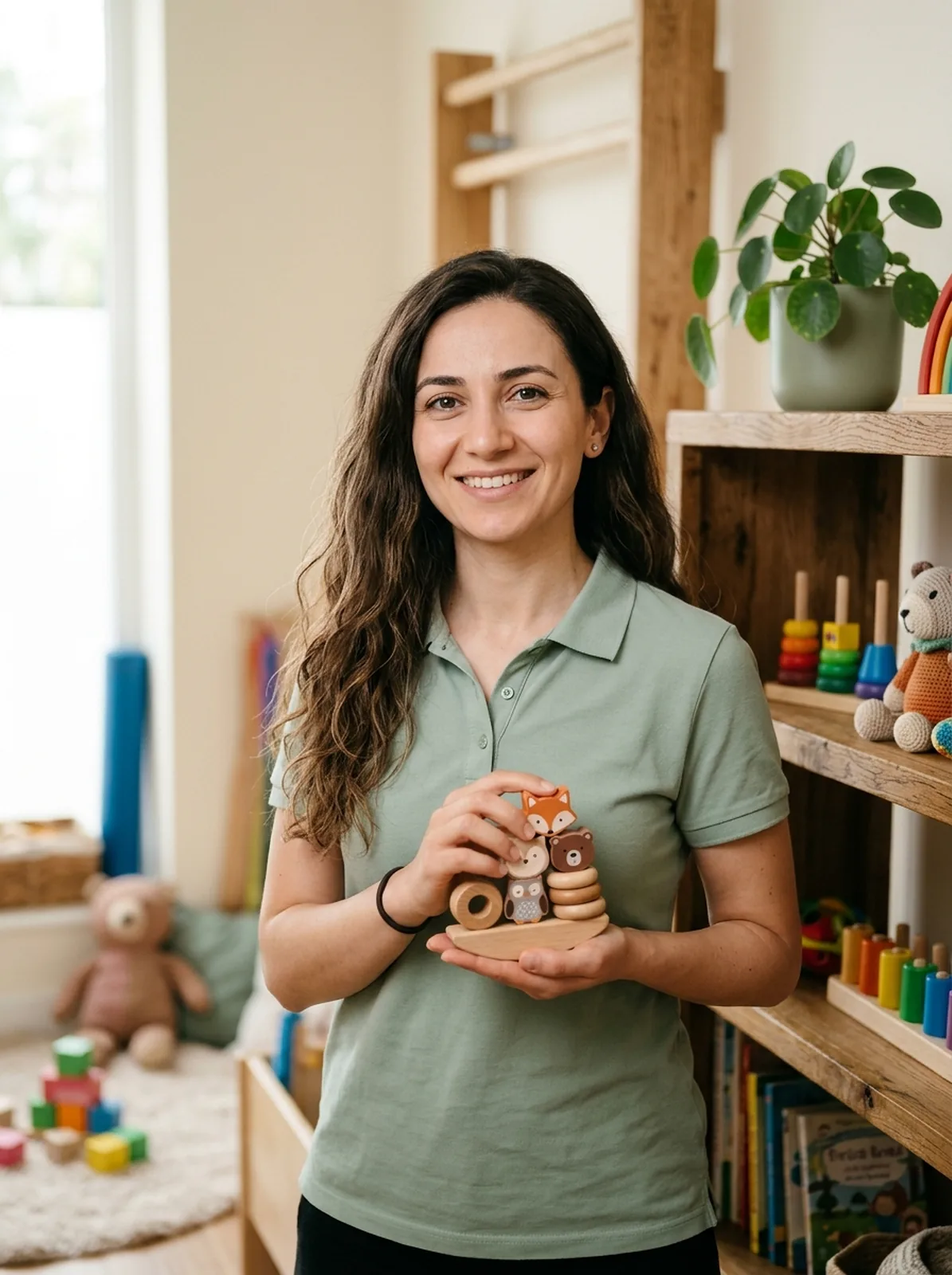
Ece Demirtaş, MSc PT
This content is for general information and is not a substitute for medical advice. If you have any concerns about your child’s feet, talk to your paediatrician or a paediatric physiotherapist.
In short
- Indoors, on safe floors, bare feet are usually the best option.
- First shoes are there to protect the feet once a child starts walking outdoors, not to teach them to walk.
- In a first shoe, look for a flexible, thin and light sole, and a wide toe box.
- When children take their first independent steps varies a great deal; most walk between 8 and 18 months.
Walking first, shoes later
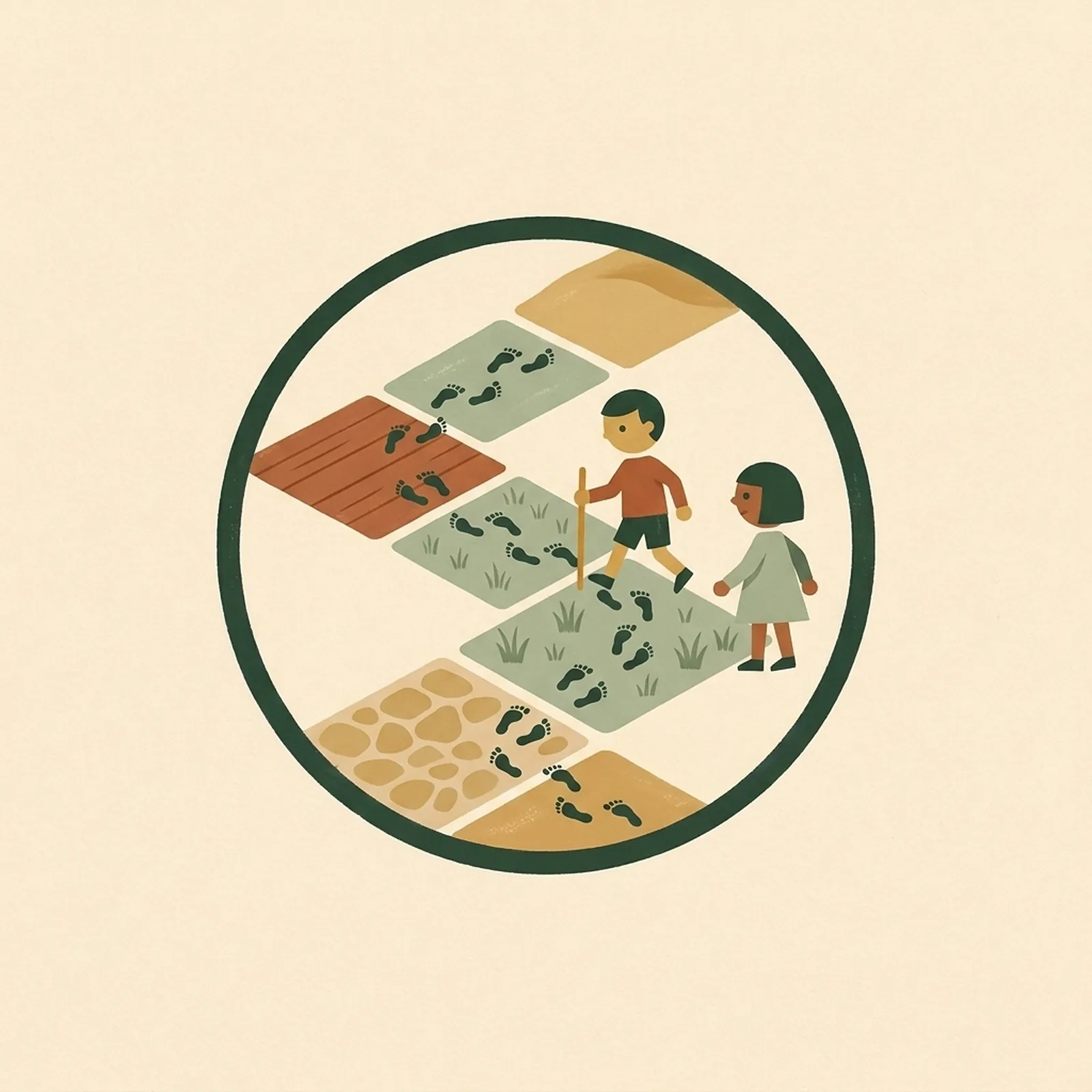
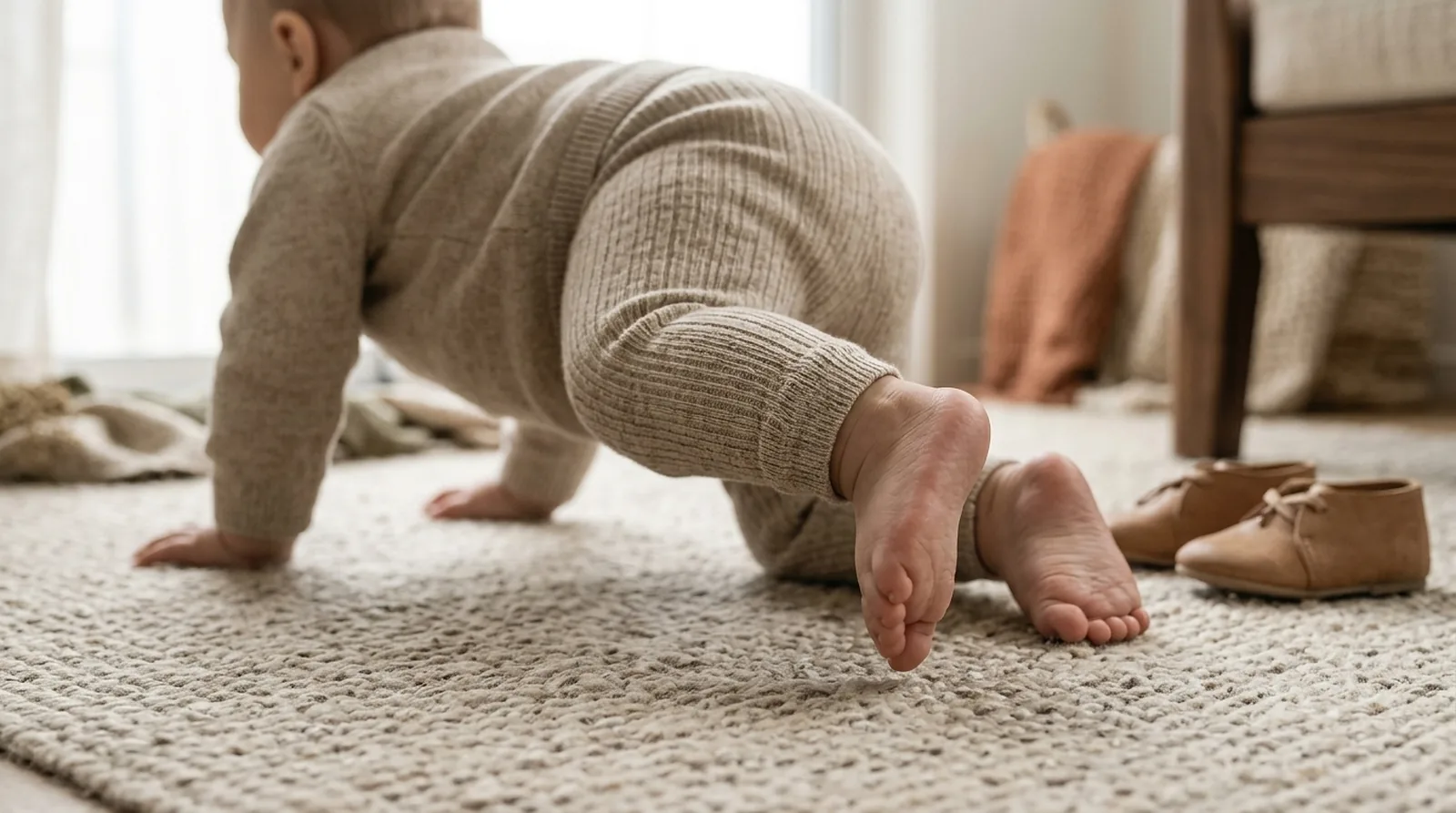
Babies learn to walk with their feet, not with shoes. A baby who pulls up to stand and cruises along the furniture finds their balance through what the soles of their feet tell them: how hard the floor is, how it slopes, how warm it is. That is why, indoors, on a safe floor that isn’t slippery, bare feet are usually the best option.
In the World Health Organization’s multicentre study, the age at which healthy children began walking independently spread across a wide range, roughly 8 to 18 months. So if the neighbour’s baby is walking at 10 months, yours may walk at 15; that range is normal.
When are shoes needed?
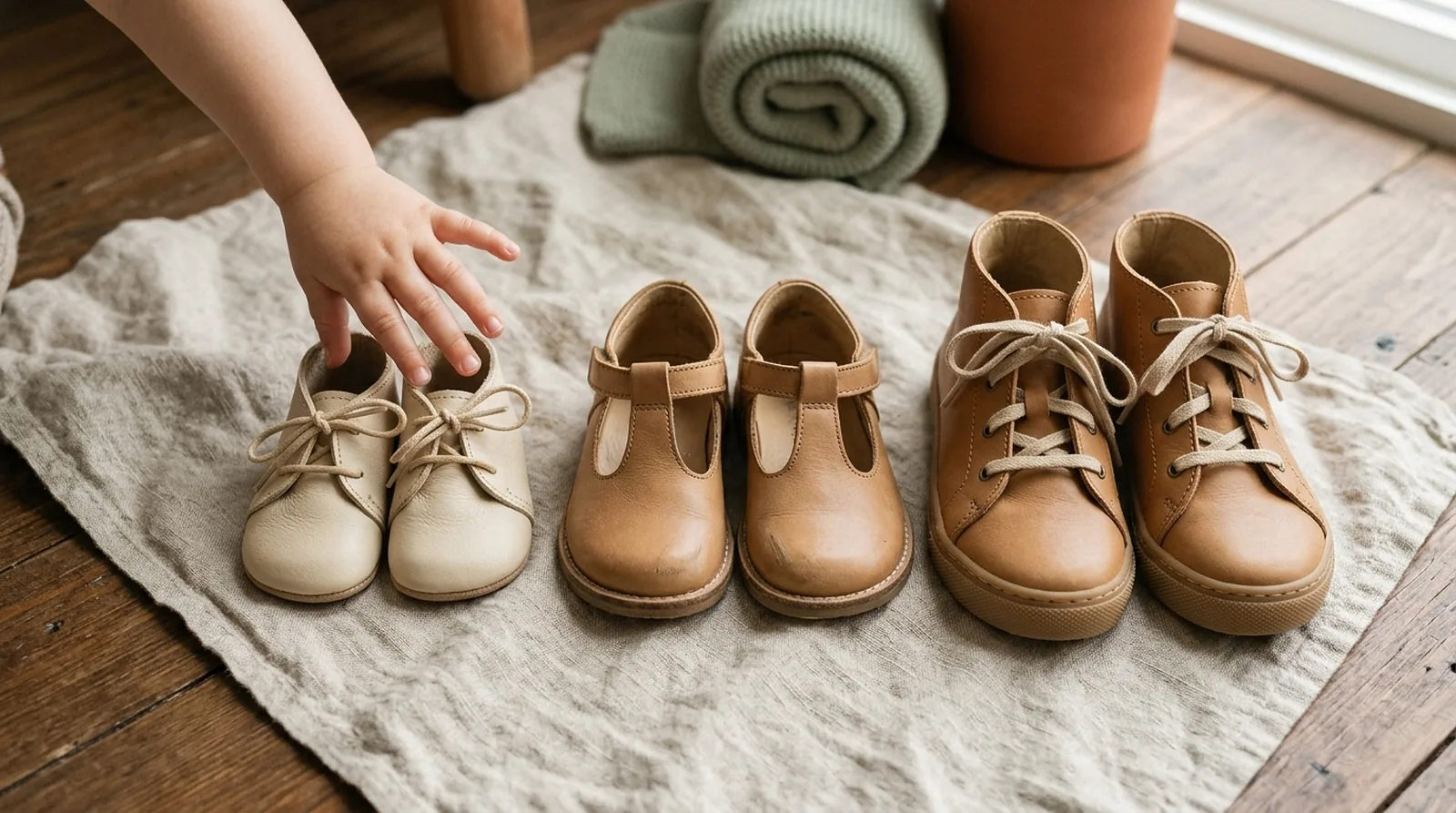
The job of a first shoe is to protect: from the cold, from hard and dirty ground, from small sharp objects. Your child needs shoes once they start walking on their own feet outdoors, in the park or on the pavement.
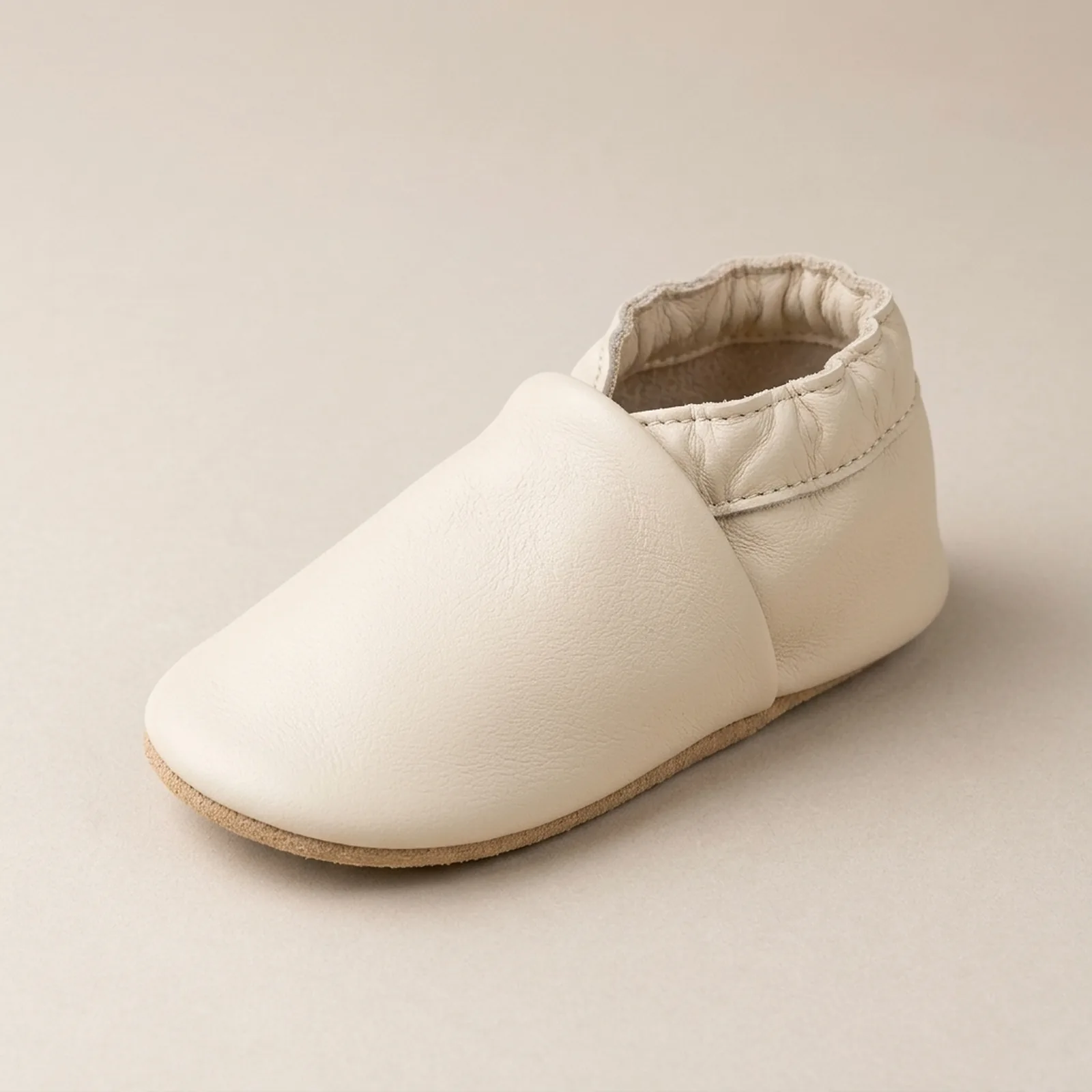
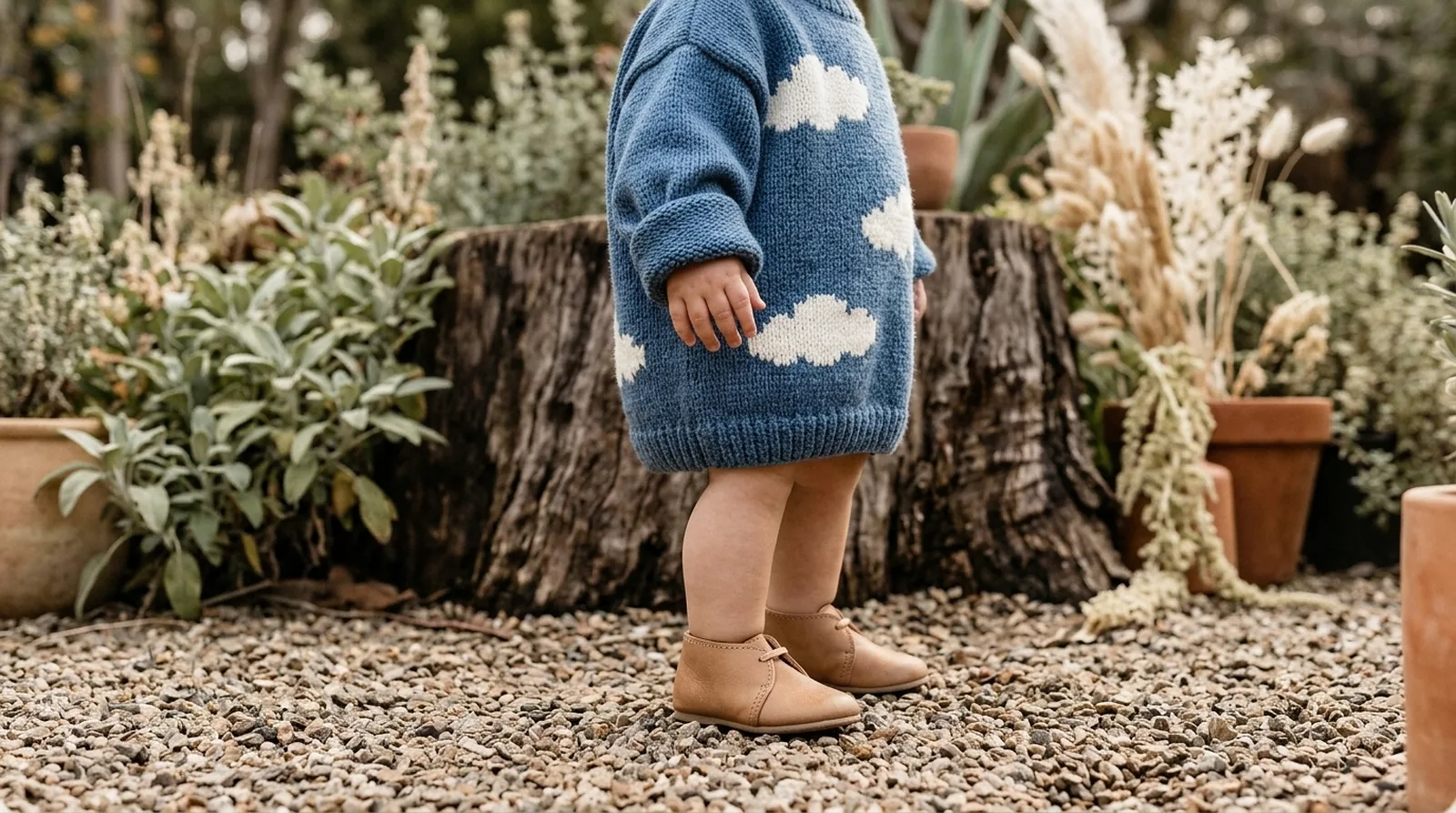
Until then, bare feet are enough at home, and on cold floors a soft-soled leather bootee. A bootee keeps the foot warm and protected, but still lets it feel the floor.
What to look for in a first shoe
Research and the advice of paediatric physiotherapists agree on a few simple criteria:
- A flexible sole: you should be able to bend the shoe easily at the front with your hand.
- A thin sole: 2–4 mm, thin enough not to cut off the feel of the ground.
- A wide toe box: the toes should be able to spread inside the shoe.
- Lightness: around 100 grams or less for a single shoe.
- A flat sole: no difference in height between heel and toe.
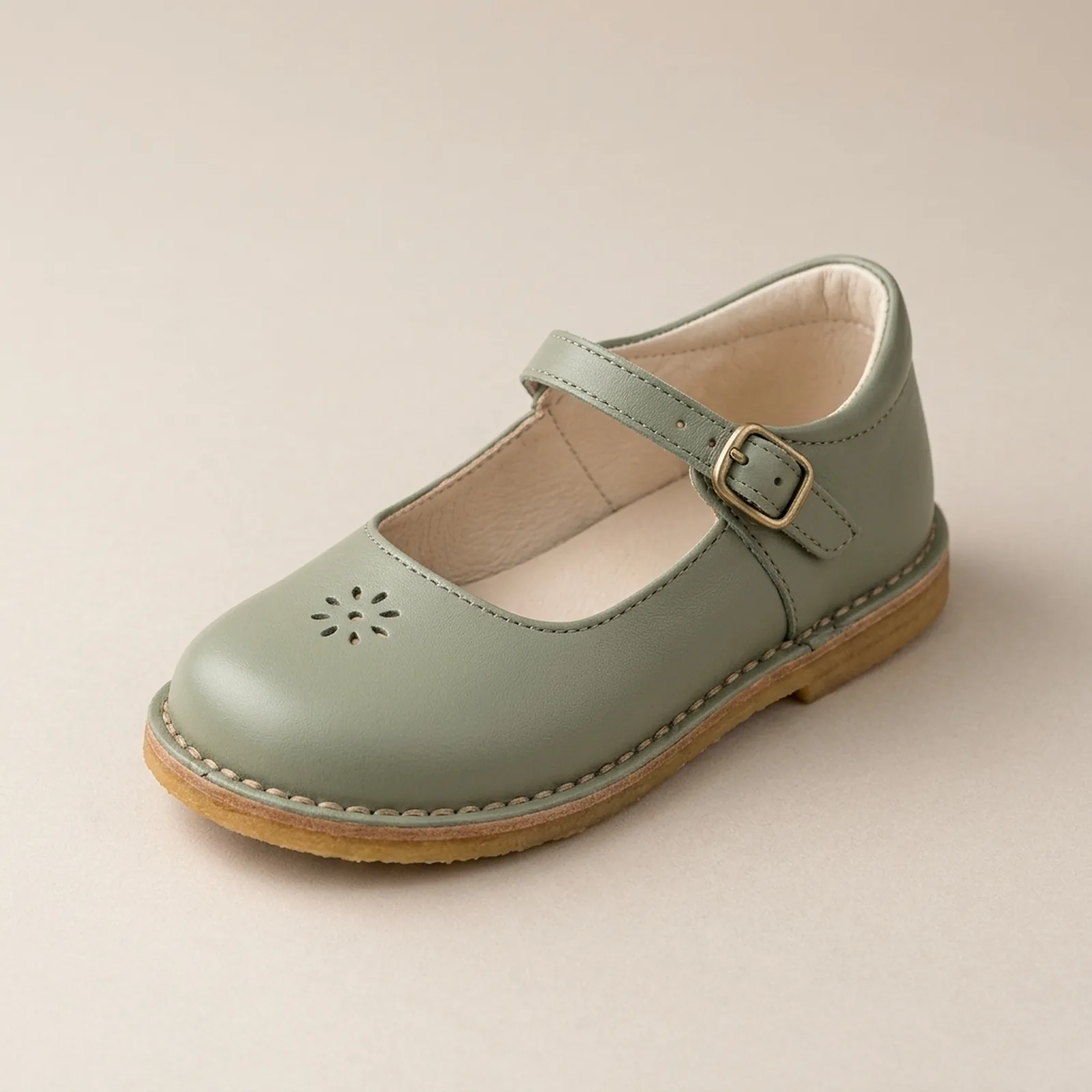
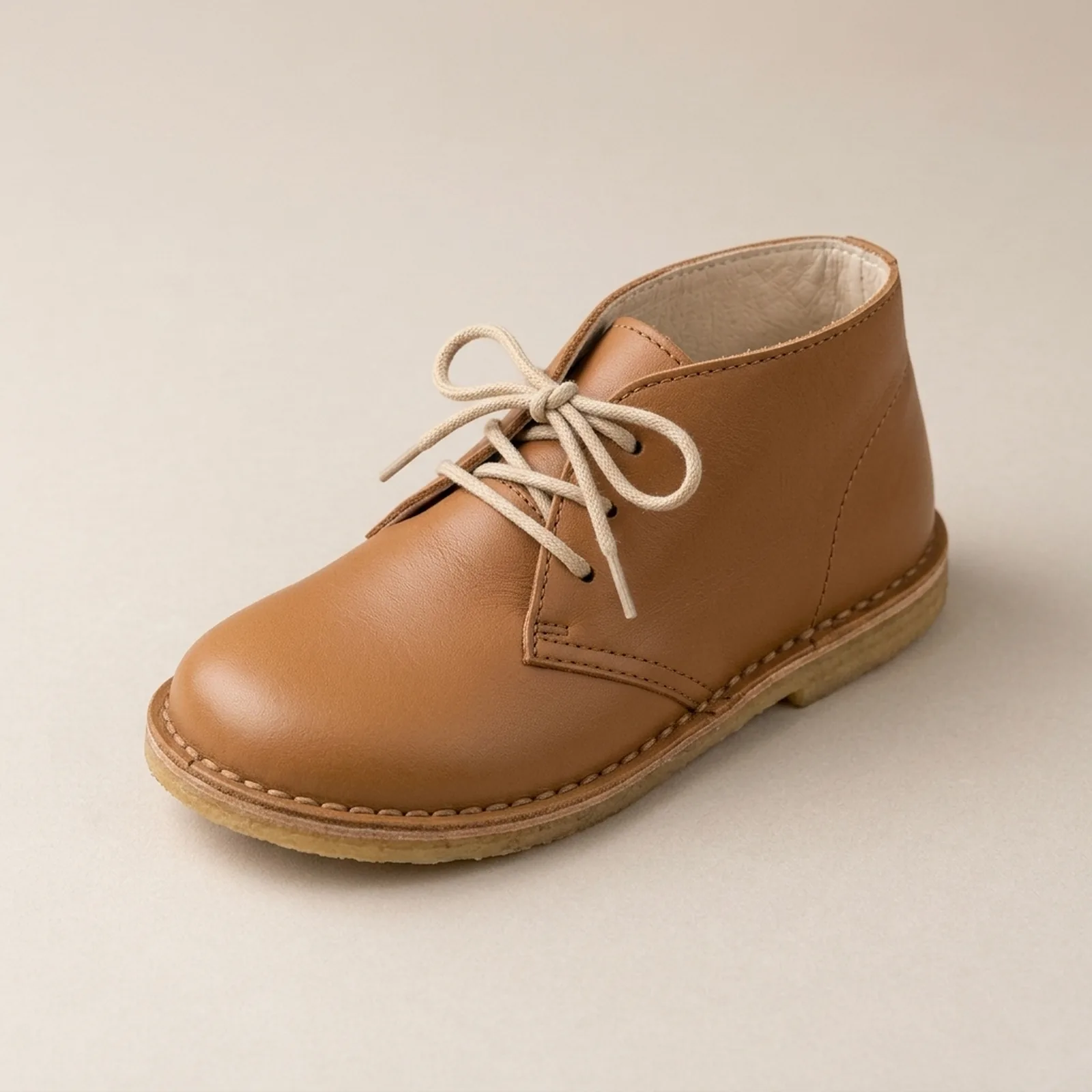
- A fastening that keeps the shoe on without squeezing: hook-and-loop, an ankle strap or laces.
Are a stiff heel and arch support needed?
For many years it was thought that first shoes should be stiff and hold the ankle. The reviews we have today say that a healthy child’s foot does not need support from outside, and that a shoe should restrict the foot’s natural movement as little as possible. There are also measurements showing that walking in flexible shoes is closer to walking barefoot.
This doesn’t mean the same applies to every child. If a specialist has made a particular recommendation for your child, follow that recommendation.
Remember to measure
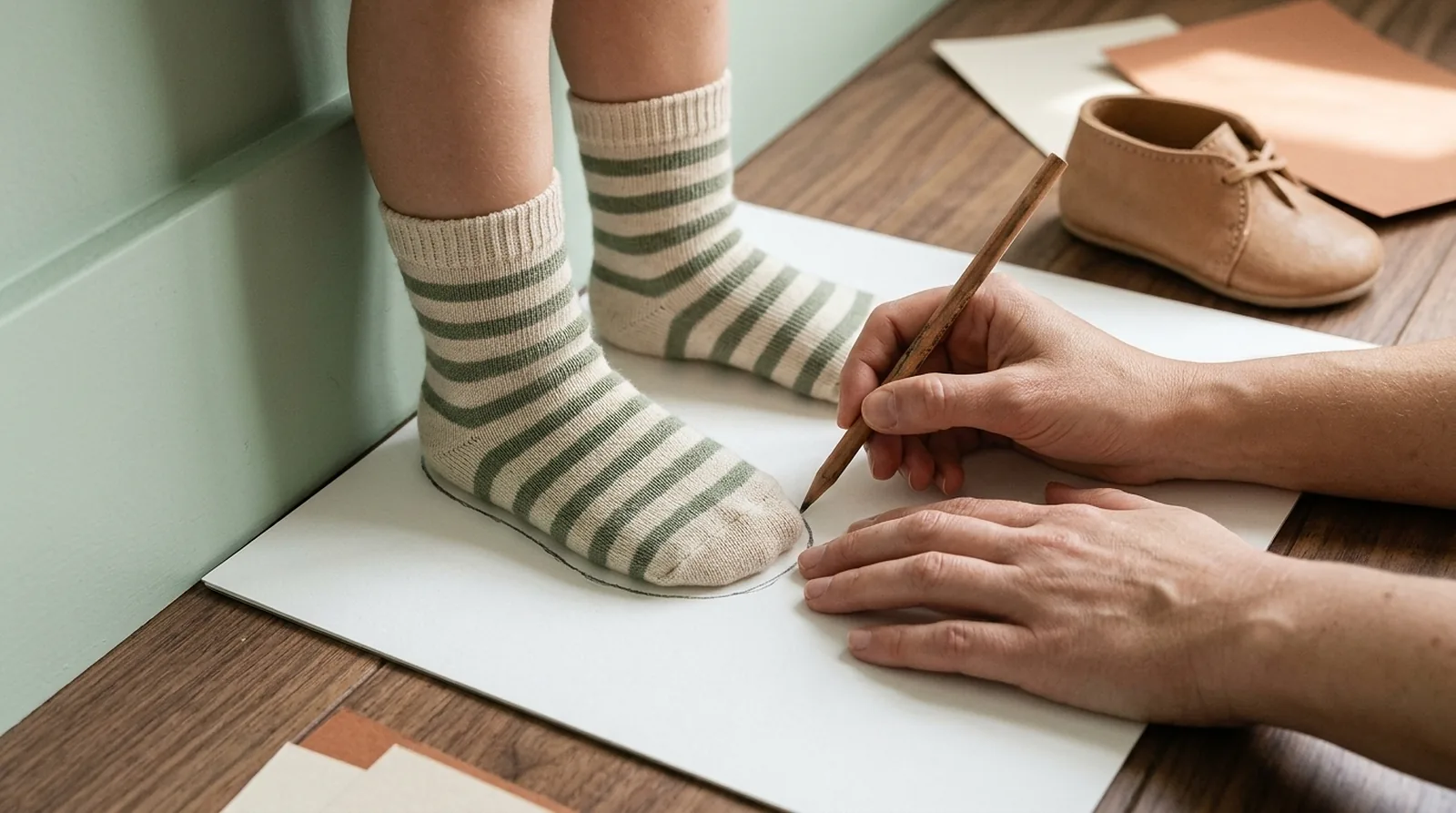
In the early years feet grow fast; they can go up a size roughly every two months. Measure when you buy shoes and at regular intervals afterwards. You can use any of the three methods in our Size Guide.
When to ask a specialist
If your child is 18 months old and not yet taking any steps, keeps falling to the same side when walking, or uses one foot differently from the other, talk to your paediatrician.
Free 20-minute call with a specialistSources
- Research WHO Multicentre Growth Reference Study Group. WHO Motor Development Study: windows of achievement for six gross motor development milestones. Acta Paediatrica Suppl. 2006;450:86–95.
- Research Adolph KE, Cole WG, Komati M, et al. How do you learn to walk? Thousands of steps and dozens of falls per day. Psychological Science. 2012;23(11):1387–1394.
- Review Staheli LT. Shoes for children: a review. Pediatrics. 1991;88(2):371–375.
- Research Wolf S, Simon J, Patikas D, et al. Foot motion in children shoes: a comparison of barefoot walking with shod walking in conventional and flexible shoes. Gait & Posture. 2008;27(1):51–59.
- Review Morrison SC, Price C, McClymont J, Nester C. Big issues for small feet: developmental, biomechanical and clinical narratives on children's footwear. J Foot Ankle Res. 2018;11:39.
Not a substitute for medical advice. If you have any concerns about your child’s feet, talk to your paediatrician or a paediatric physiotherapist.