Choosing well · 5 min read
Why does a flexible sole matter? The bend test at home
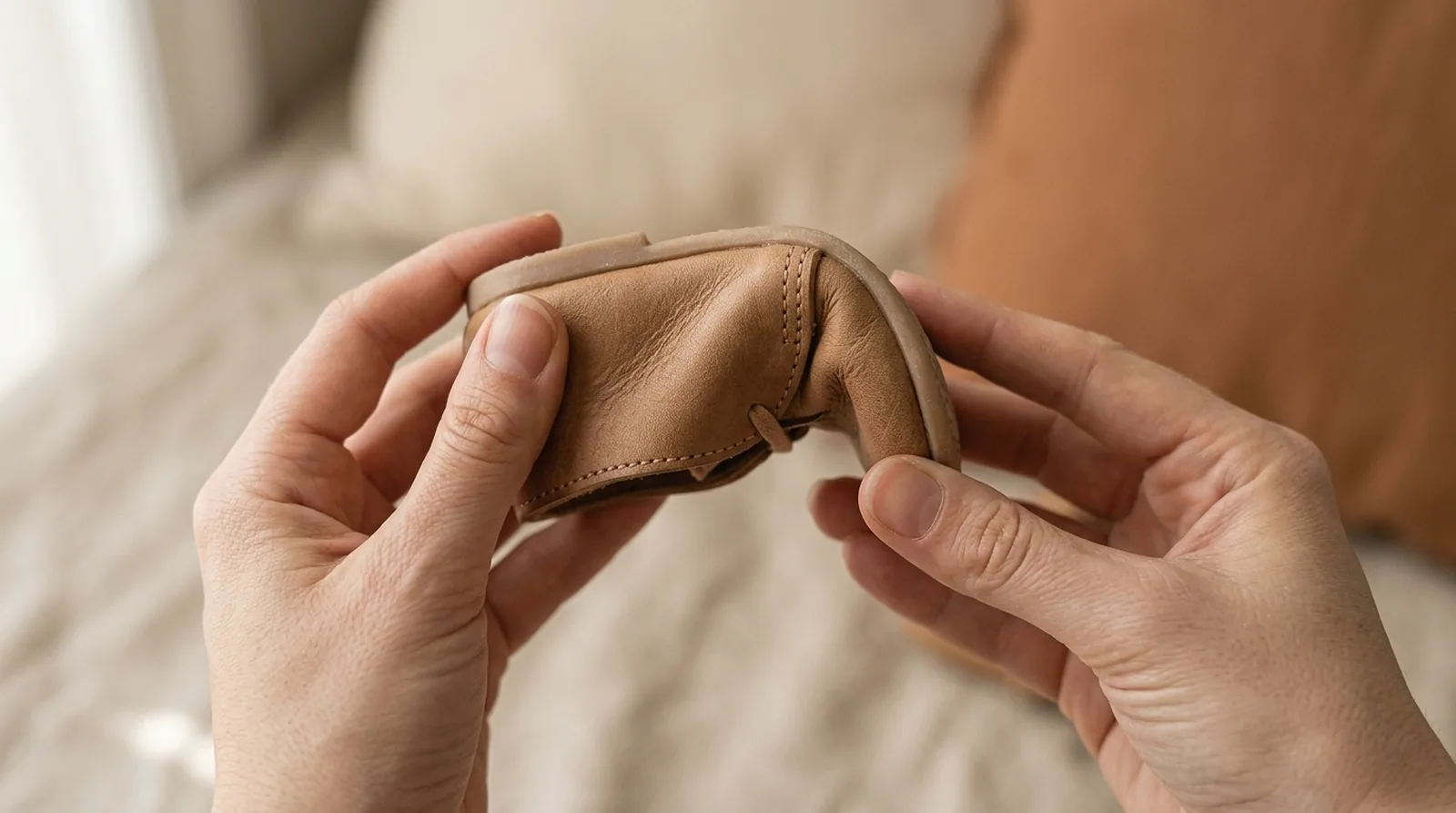
Take the shoe in your hands and bend it at the front. This simple test shows how much room the shoe leaves the foot to move.
Ece Demirtaş, MSc PT
This content is for general information and is not a substitute for medical advice. If you have any concerns about your child’s feet, talk to your paediatrician or a paediatric physiotherapist.
In short
- When walking, the foot bends at the toe joints; the shoe should bend in the same place.
- In flexible shoes, the foot’s movement stays closer to barefoot.
- The test: bend the shoe at the front; it should bend without effort.
- For first-steps shoes, being flexible enough for the toe and heel to touch is ideal; for older children the sole can be a little firmer.
Where does the foot bend?
At the end of every step the heel lifts off the ground and the foot bends at the joints where the toes meet the sole. This bend is what drives walking forward. A stiff-soled shoe makes it harder; instead, the foot moves together with the shoe like a plank.
A measurement study with children in Germany found that flexible shoes restricted the movement inside the foot less than conventional shoes.
The bend test
In a shop or at home, before you buy:
- Hold the shoe by the heel and the toe.
- Bend it at the front, where the toes sit.
- It should bend without effort and spring back when you let go.
- If the shoe bends in the middle (under the arch), the sole is too soft; it should bend at the front.
- Twist the shoe gently sideways too; it should give a little.
How flexible?
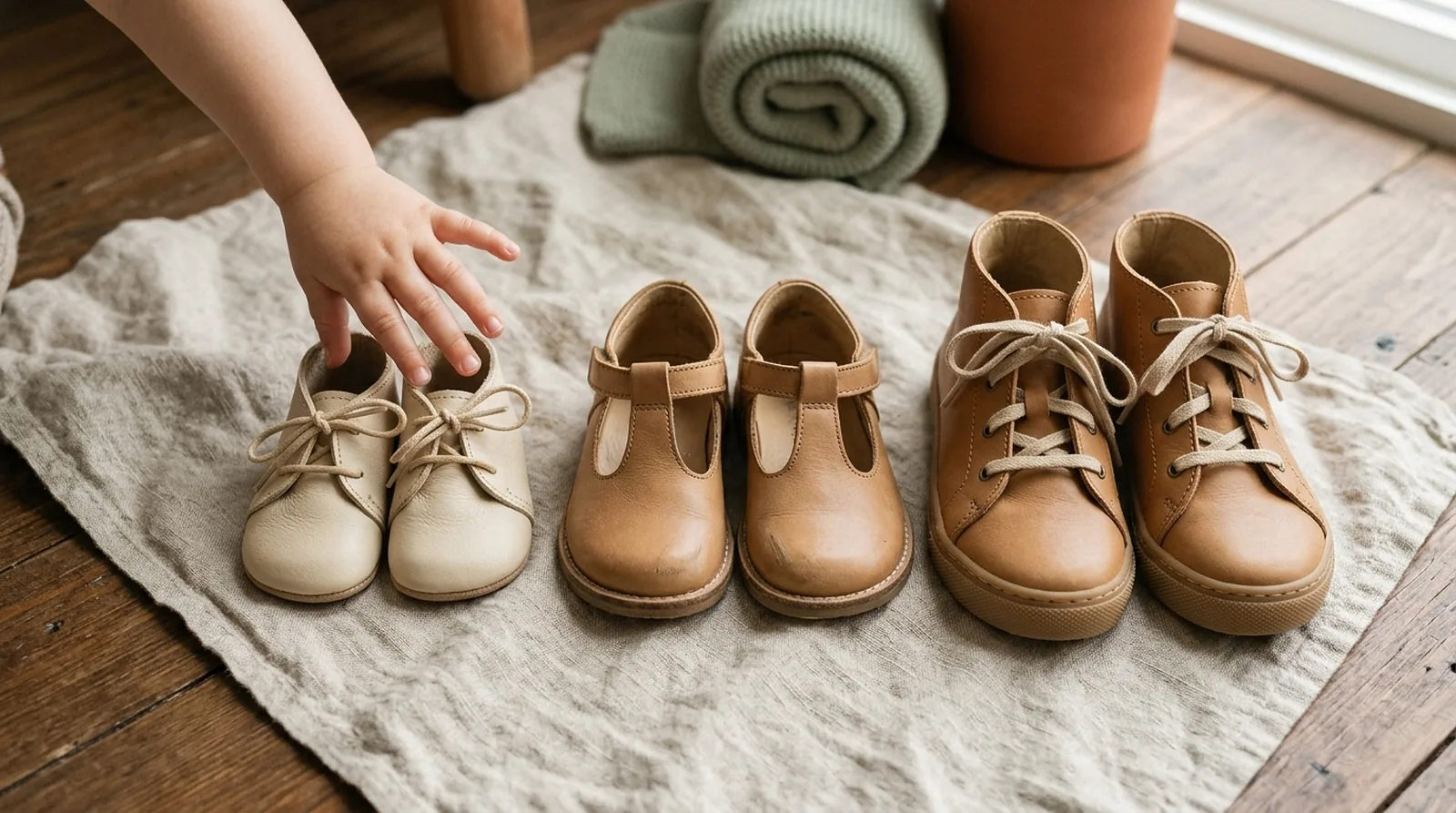
In first-steps shoes, it is ideal if the toe and heel almost touch. For 3–6 year olds who run and jump, the sole can be a little thicker and have more grip; even so, it should still bend at the front by hand.
On our product pages we state each model’s flexibility on three levels: very high, high and medium. Our medium-flexibility models (Neve, Bosco, Cavallino) are for particular uses: snow, woodland and riding.
When to ask a specialist
If your child often complains of foot pain even in flexible shoes, talk to a paediatric physiotherapist.
Free 20-minute call with a specialistSources
- Research Wolf S, Simon J, Patikas D, et al. Foot motion in children shoes: a comparison of barefoot walking with shod walking in conventional and flexible shoes. Gait & Posture. 2008;27(1):51–59.
- Review Wegener C, Hunt AE, Vanwanseele B, Burns J, Smith RM. Effect of children's shoes on gait: a systematic review and meta-analysis. J Foot Ankle Res. 2011;4:3.
- Review Morrison SC, Price C, McClymont J, Nester C. Big issues for small feet: developmental, biomechanical and clinical narratives on children's footwear. J Foot Ankle Res. 2018;11:39.
Not a substitute for medical advice. If you have any concerns about your child’s feet, talk to your paediatrician or a paediatric physiotherapist.