Development · 7 min read
Flat feet: when are they normal in children?
Most young children’s feet look flat, and this is usually normal. When should you wait, and when should you ask?

Assoc. Prof. Dr Zeynep Akın
This content is for general information and is not a substitute for medical advice. If you have any concerns about your child’s feet, talk to your paediatrician or a paediatric physiotherapist.
In short
- Flexible flat feet are seen in a large share of pre-school children, and become less common with age.
- In babies, the fat pad under the sole hides the arch.
- Flexible flat feet (where an arch appears when the child rises onto tiptoe) are usually painless and don’t need treatment.
- If there is pain, stiffness, or a difference on one side only, talk to a specialist.
Why do they look flat?
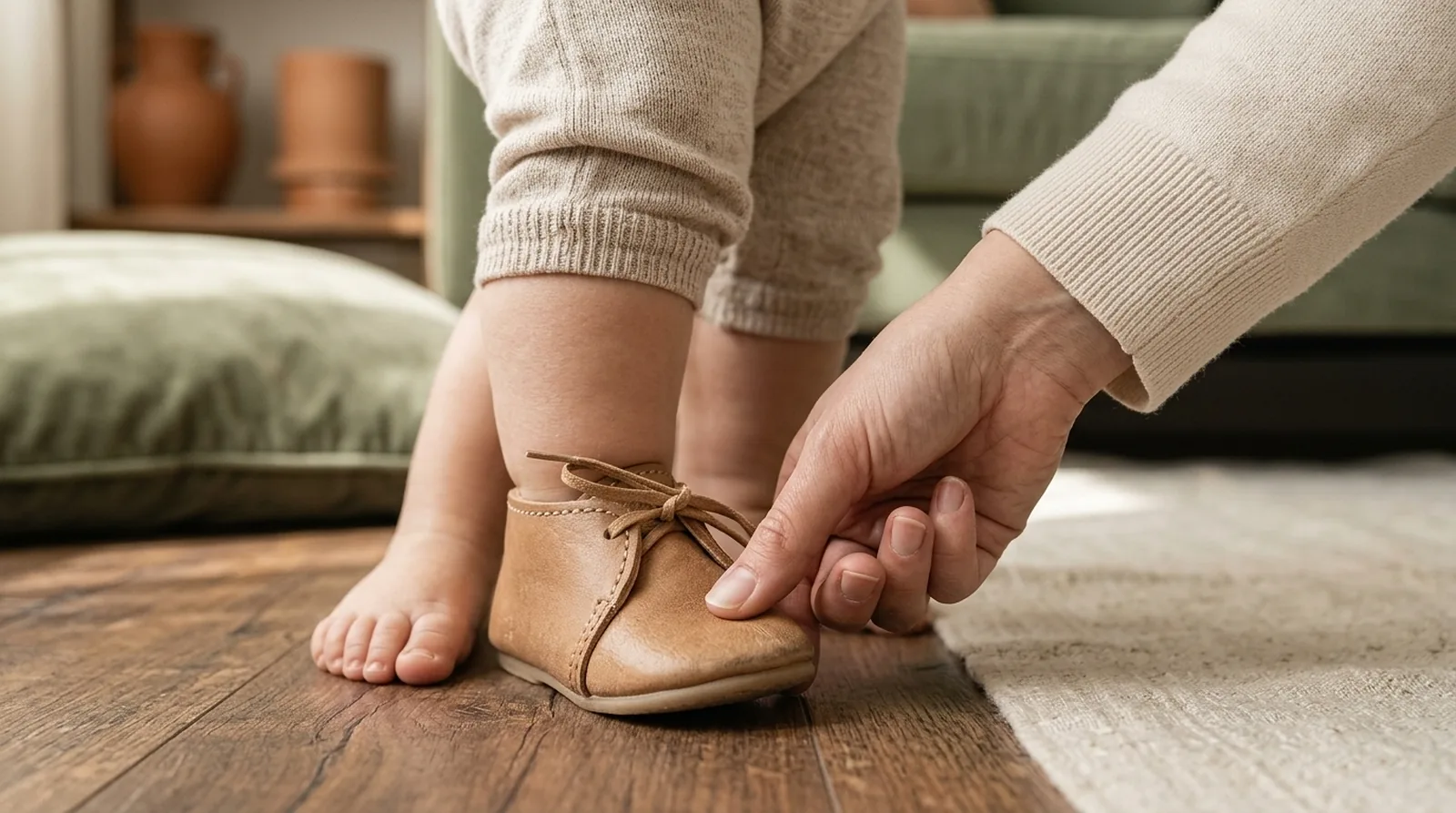
When you look at the foot of a child who has just started walking, you often won’t see an arch. There are two reasons: the fat pad under the sole fills the arch, and the ligaments that support the foot are still flexible. The arch slowly becomes more defined as the child grows and moves.
A classic study of 882 feet in the US showed that the foot arch develops with age, and that there is a wide normal range in childhood. A survey of more than 800 children aged 3–6 in Austria also reported that flat feet are very common at a young age and become markedly less common with age.
Flexible or rigid?
The first thing specialists look at is flexibility. You can make a simple observation yourself: when your child rises onto tiptoe, or when you lift their big toe upwards, does an arch appear along the inside edge of the foot? If it does, this is a flexible flat foot, and in most children it is a normal stage of development.
If the foot stays flat and rigid in every position, if there is pain, or if the two feet are clearly different from each other, it is something a specialist should look at.
Are special shoes or insoles needed?
For children with painless, flexible flat feet, there is no strong evidence that special insoles or stiff shoes make a difference in the long term. A Cochrane review on the subject notes that the available studies are limited and of variable quality.
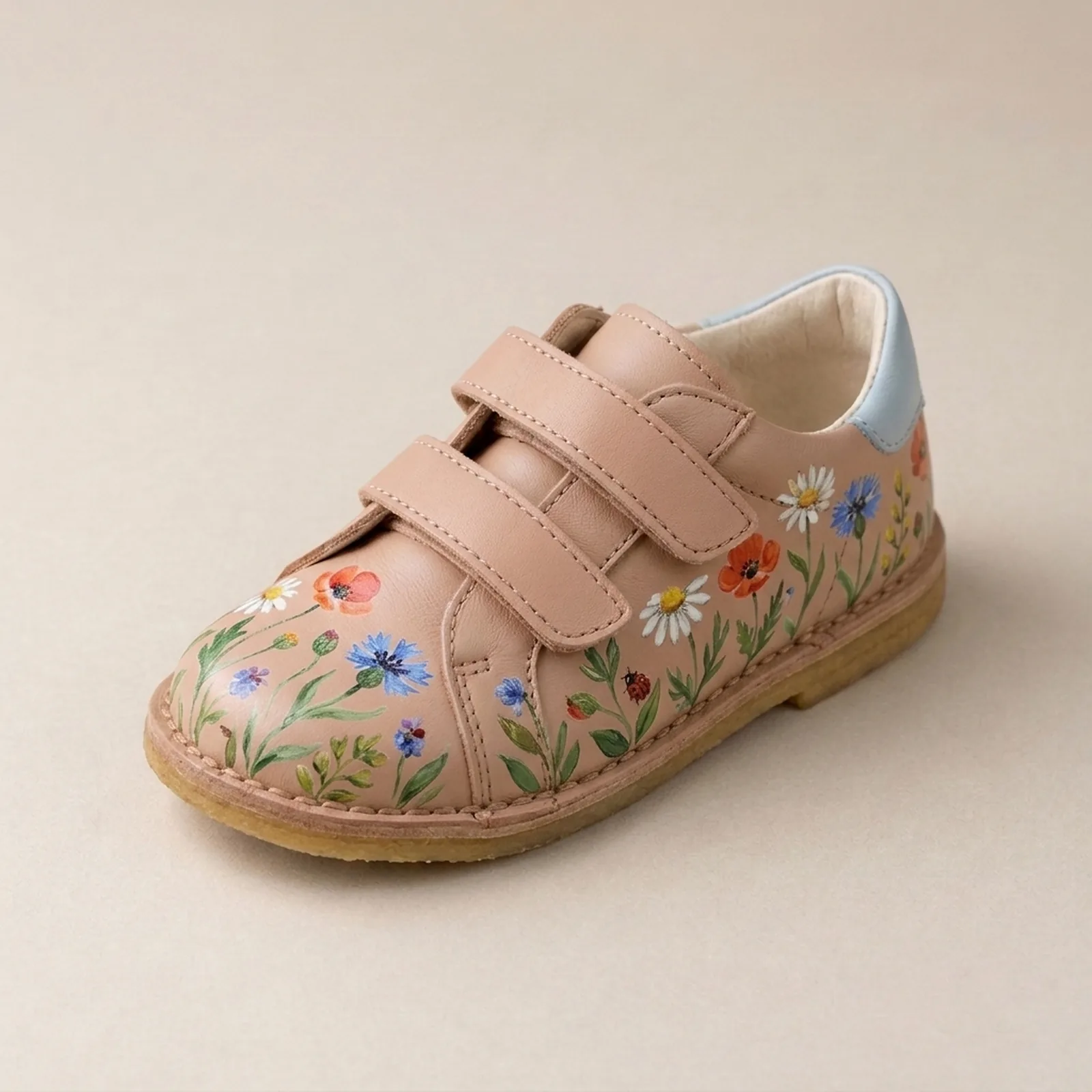
That is why we don’t use arch support in our shoes; our insoles are flat. But if a specialist has recommended an insole for your child, our insoles are removable, and the one the specialist recommended can go in their place.
What can you do at home?
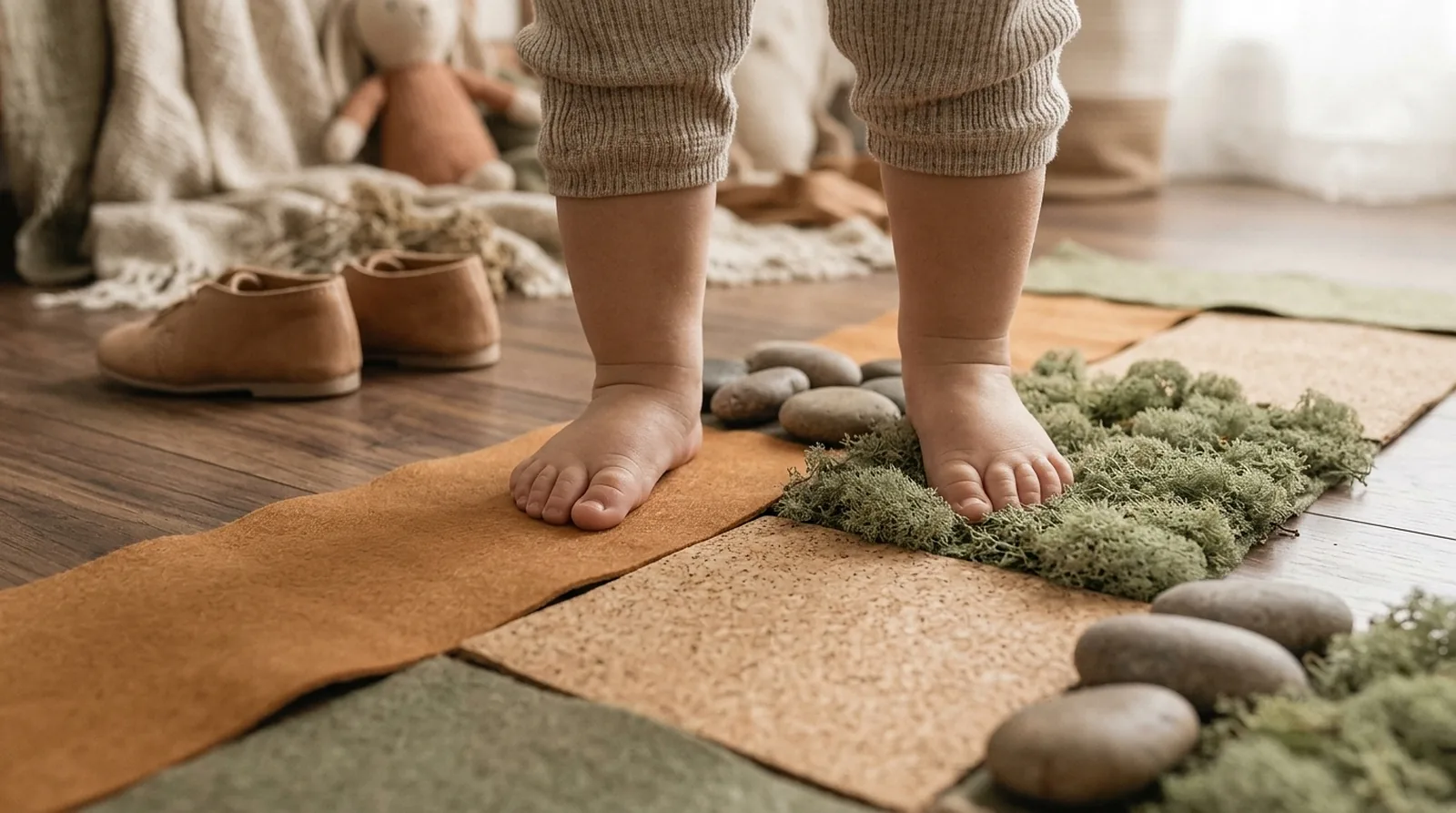
- Leave time for bare feet on safe ground.
- Play games such as walking on tiptoe, walking on heels and standing on one foot.
- Try small games such as picking up tissues scattered on the floor with the toes.
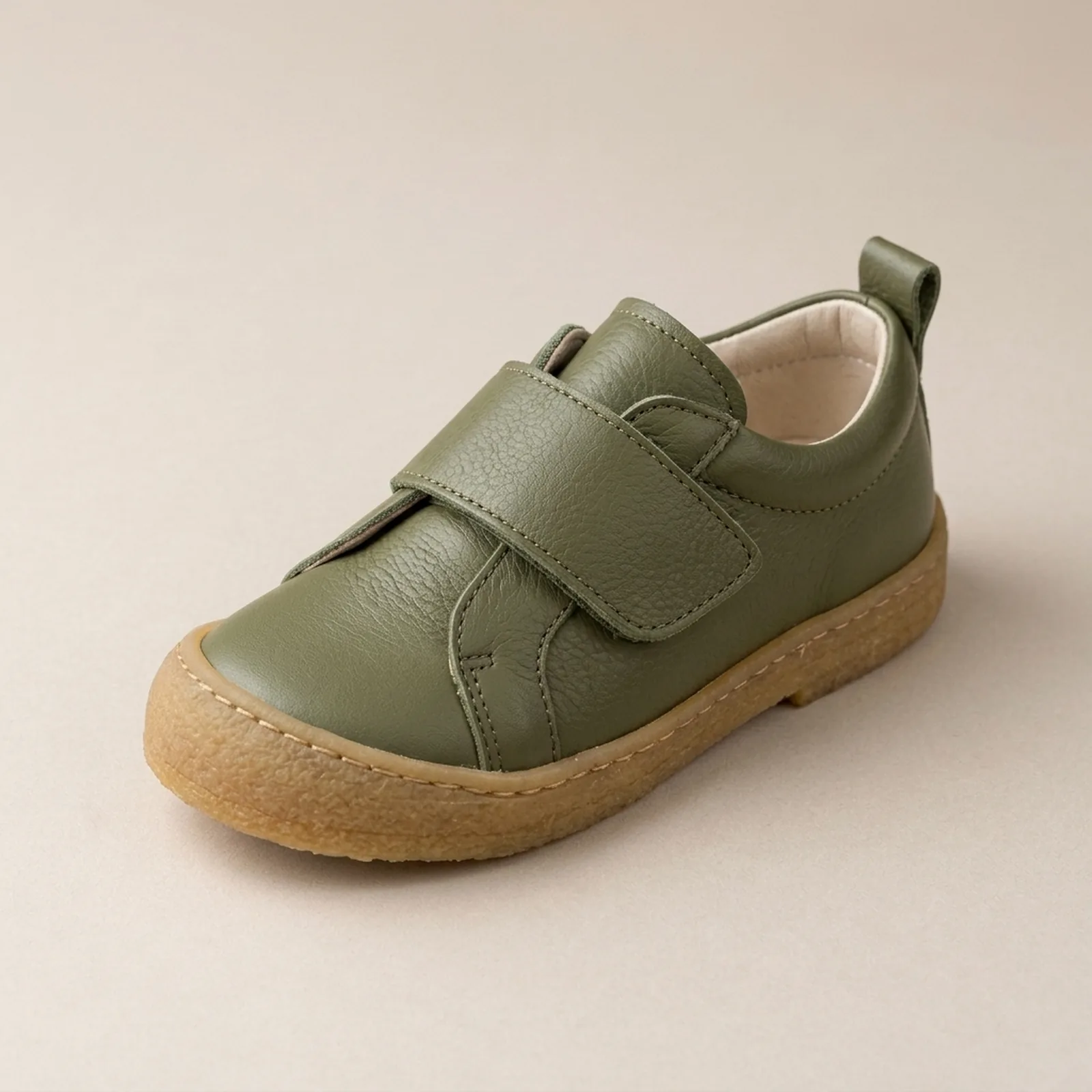
- Choose flexible shoes with a wide toe box.
When to ask a specialist
If there is pain, complaints of tiredness, frequent tripping and falling, stiffness in the foot, a clear difference between the two feet, or one side of the shoe wears down very quickly, talk to a paediatric orthopaedist or a paediatric physiotherapist.
Free 20-minute call with a specialistSources
- Research Staheli LT, Chew DE, Corbett M. The longitudinal arch: a survey of eight hundred and eighty-two feet in normal children and adults. J Bone Joint Surg Am. 1987;69(3):426–428.
- Research Pfeiffer M, Kotz R, Ledl T, Hauser G, Sluga M. Prevalence of flat foot in preschool-aged children. Pediatrics. 2006;118(2):634–639.
- Review Evans AM, Rome K. A Cochrane review of the evidence for non-surgical interventions for flexible pediatric flat feet. Eur J Phys Rehabil Med. 2011;47(1):69–89.
- Research Rao UB, Joseph B. The influence of footwear on the prevalence of flat foot: a survey of 2300 children. J Bone Joint Surg Br. 1992;74(4):525–527.
Not a substitute for medical advice. If you have any concerns about your child’s feet, talk to your paediatrician or a paediatric physiotherapist.