Play and movement · 6 min read
When the sole talks to the ground: sensory play
The sole of the foot is one of the body’s richest sensory areas. Sand, grass, leaves and water: sensory games you can set up at home and in the garden.
Selin Yalçın
This content is for general information and is not a substitute for medical advice. If you have any concerns about your child’s feet, talk to your paediatrician or a paediatric physiotherapist.
In short
- The sole of the foot constantly sends information to the brain to help with balance.
- Different textures and surfaces make this information richer.
- Sensory play doesn’t need expensive materials: sand, leaves, a towel, water.
- Some children dislike certain textures; don’t force them.
The foot is a sense organ
The sole of the foot has a great many receptors that sense touch, pressure and vibration. The information from these receptors helps the brain work out the body’s position and balance. A. Jean Ayres, the founder of the sensory integration approach, describes how children learn to process sensory information from their bodies through play.
That is why we say “feet grow stronger by talking to the ground”: every new surface asks the foot a new question.
A sensory path at home
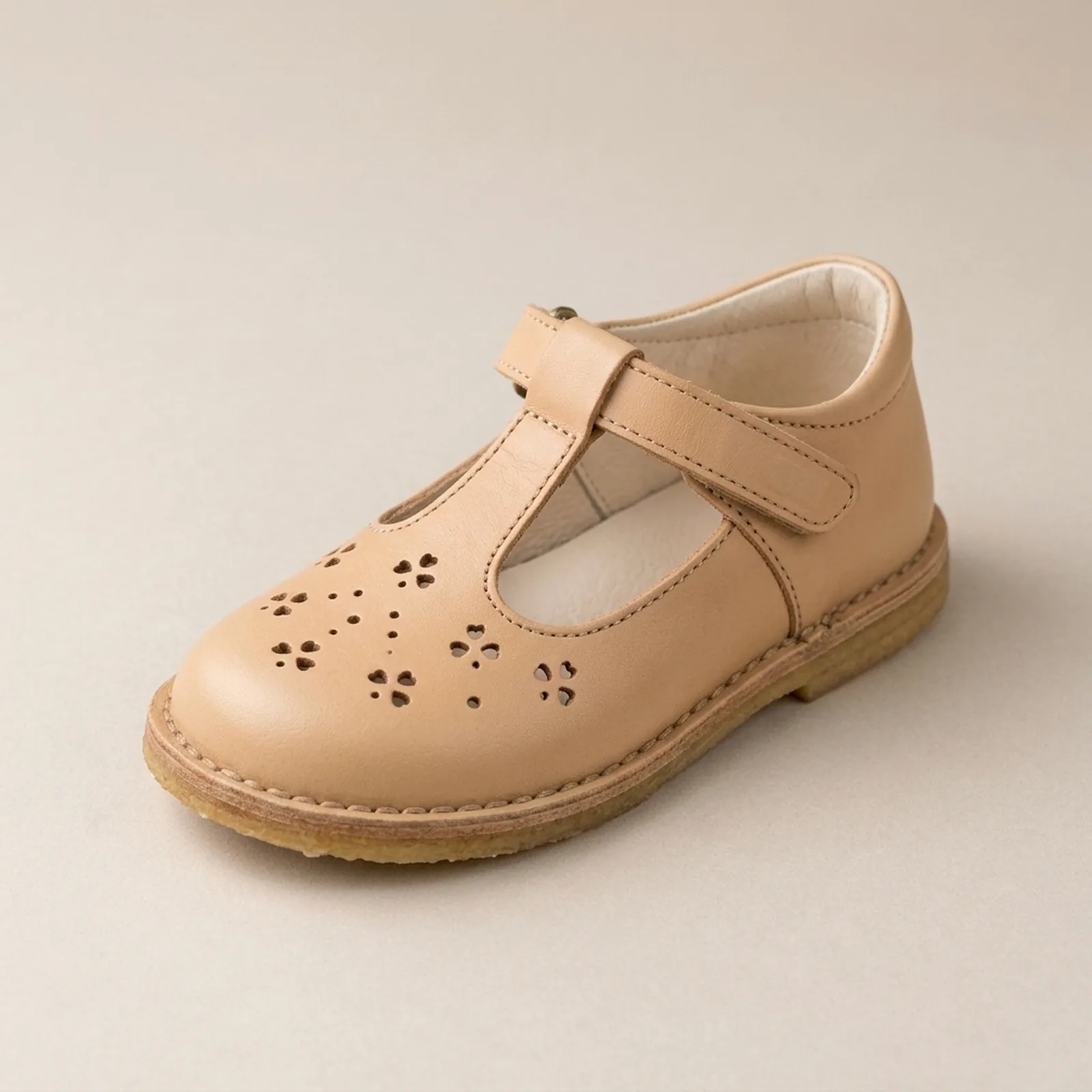
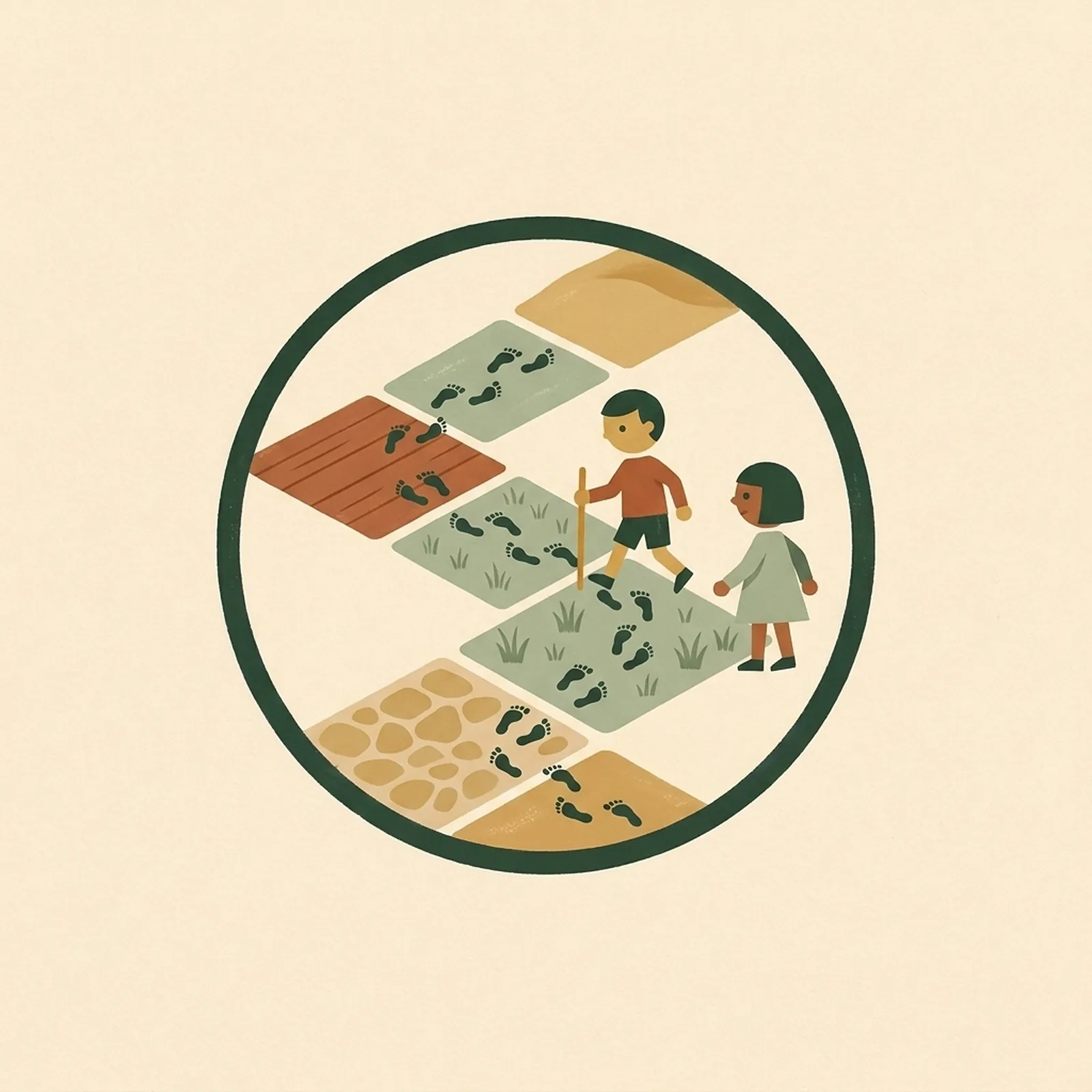
The easiest place to start is the sensory path in the Play Atlas:
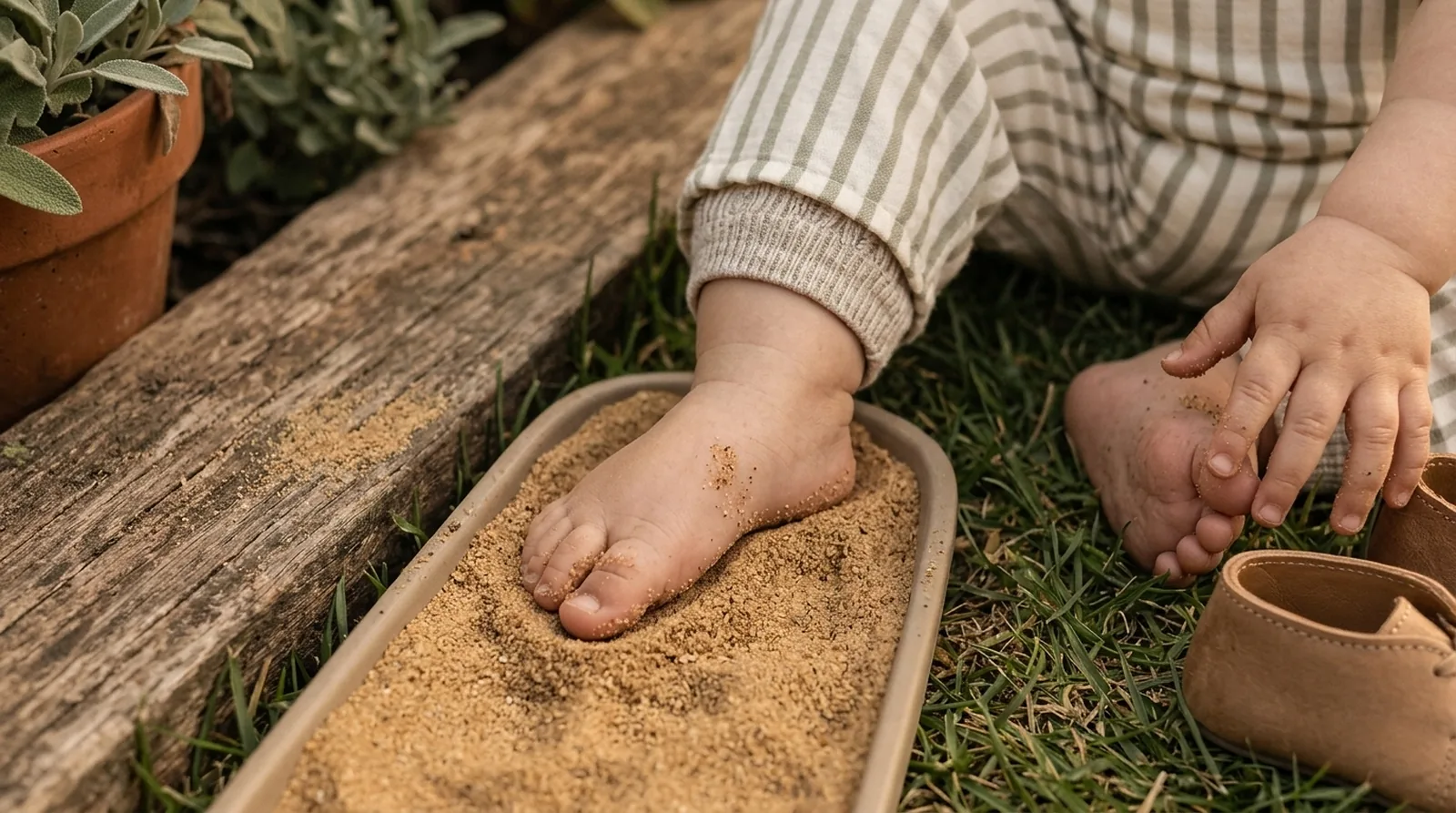
- Put different textures in five or six trays or box lids: sand, dry leaves, a soft towel, corks, warm water.
- Let your child walk across them barefoot, at their own pace.
- Ask what they feel, and repeat their words back to them.
- For babies, just two or three large, safe textures are enough.
Outdoors
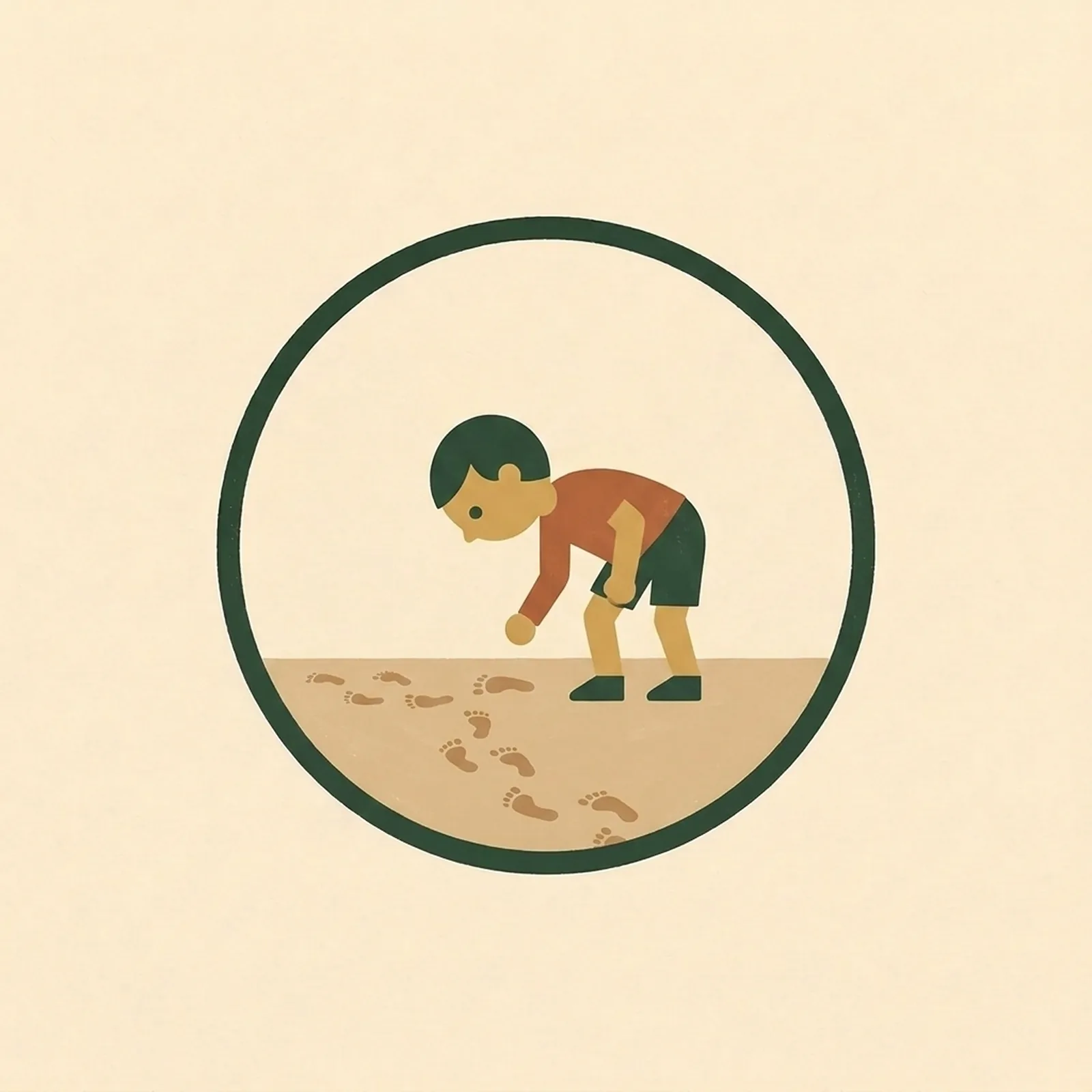
Grass, sand, earth and flat stones are the richest sensory surfaces. Taking shoes off for a few minutes in a park or on a beach you know to be safe adds a small but valuable experience to a child’s day. Games such as tracking in the sand and hopscotch turn that ground into play.
Respecting sensitivities
Some children dislike wet sand, others grass. This isn’t a flaw; it’s a preference. Rather than pushing, leave that texture for a while, or let them touch it with their hands first. If sensory sensitivities make daily life noticeably harder, you could talk to an occupational therapist.
When to ask a specialist
If your child hardly ever wants to stand barefoot on any surface, reacts very strongly to certain textures, or, the other way round, doesn’t seem to notice pain, talk to an occupational therapist or a paediatrician.
Free 20-minute call with a specialistSources
- Review Ayres AJ. Sensory Integration and the Child. Los Angeles: Western Psychological Services; 1979.
- Research Hollander K, de Villiers JE, Sehner S, et al. Growing-up (habitually) barefoot influences the development of foot and arch morphology in children and adolescents. Scientific Reports. 2017;7:8079.
- Review Morrison SC, Price C, McClymont J, Nester C. Big issues for small feet: developmental, biomechanical and clinical narratives on children's footwear. J Foot Ankle Res. 2018;11:39.
Not a substitute for medical advice. If you have any concerns about your child’s feet, talk to your paediatrician or a paediatric physiotherapist.