Opening the box is only the start.
It becomes a toy, a storage box, a keepsake box. Seven concepts that change as your child grows.
The letter in the box
Welcome home, little steps. In this box you’ll find not only first shoes, but moments to get down on the floor and play together. Let them discover the world with their own soles. We are always close beside them.
From Monte Urano, Ottavino
Seven boxes, seven second lives
The photos show prototypes.
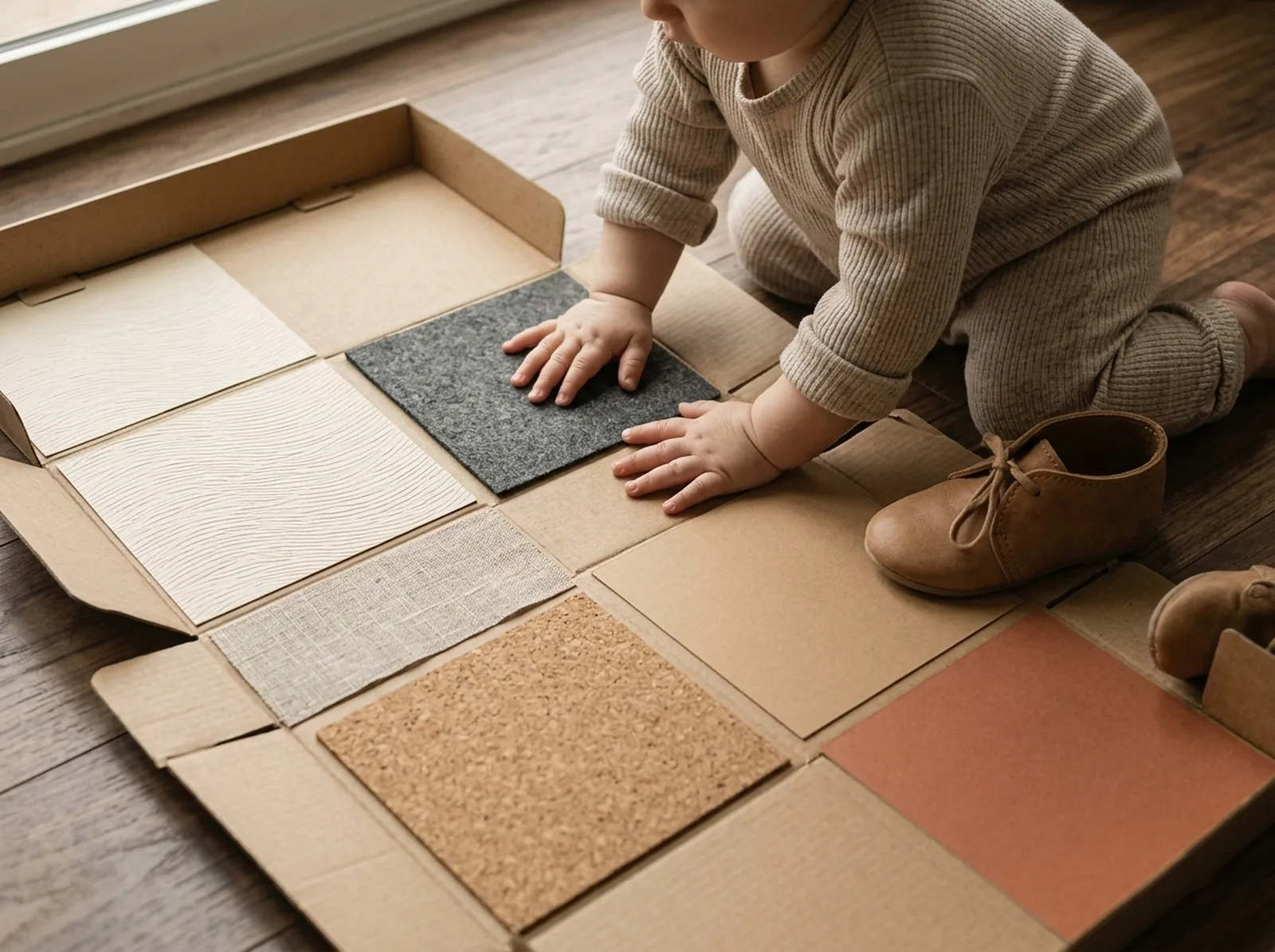
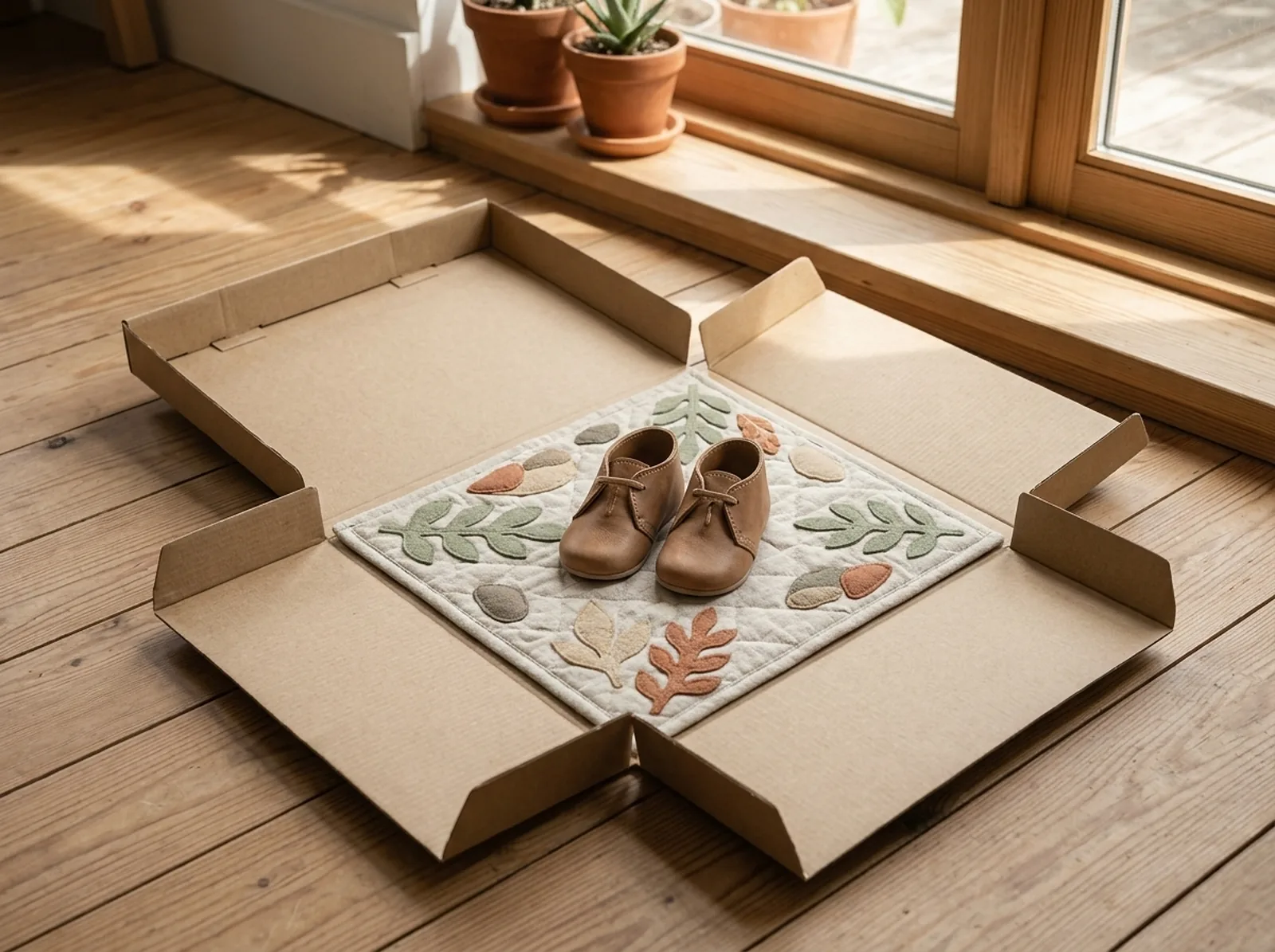
Tappeto
A sensory play mat laid out on the floor
How to use it
First Steps
The four sides of the box open out and lie flat on the floor as a mat. The inside surfaces have different textures: embossed paper, felt, a strip of linen, smooth card. A crawling baby explores them with their hands; a baby pulling up to stand explores them with their soles.
- Open the slot joints at the corners of the box.
- Lay the mat on a flat floor, textured side up.
- Let your baby move freely on the mat, barefoot.
Printed on it: High-contrast black-and-white patterns and the hills of Monte Urano
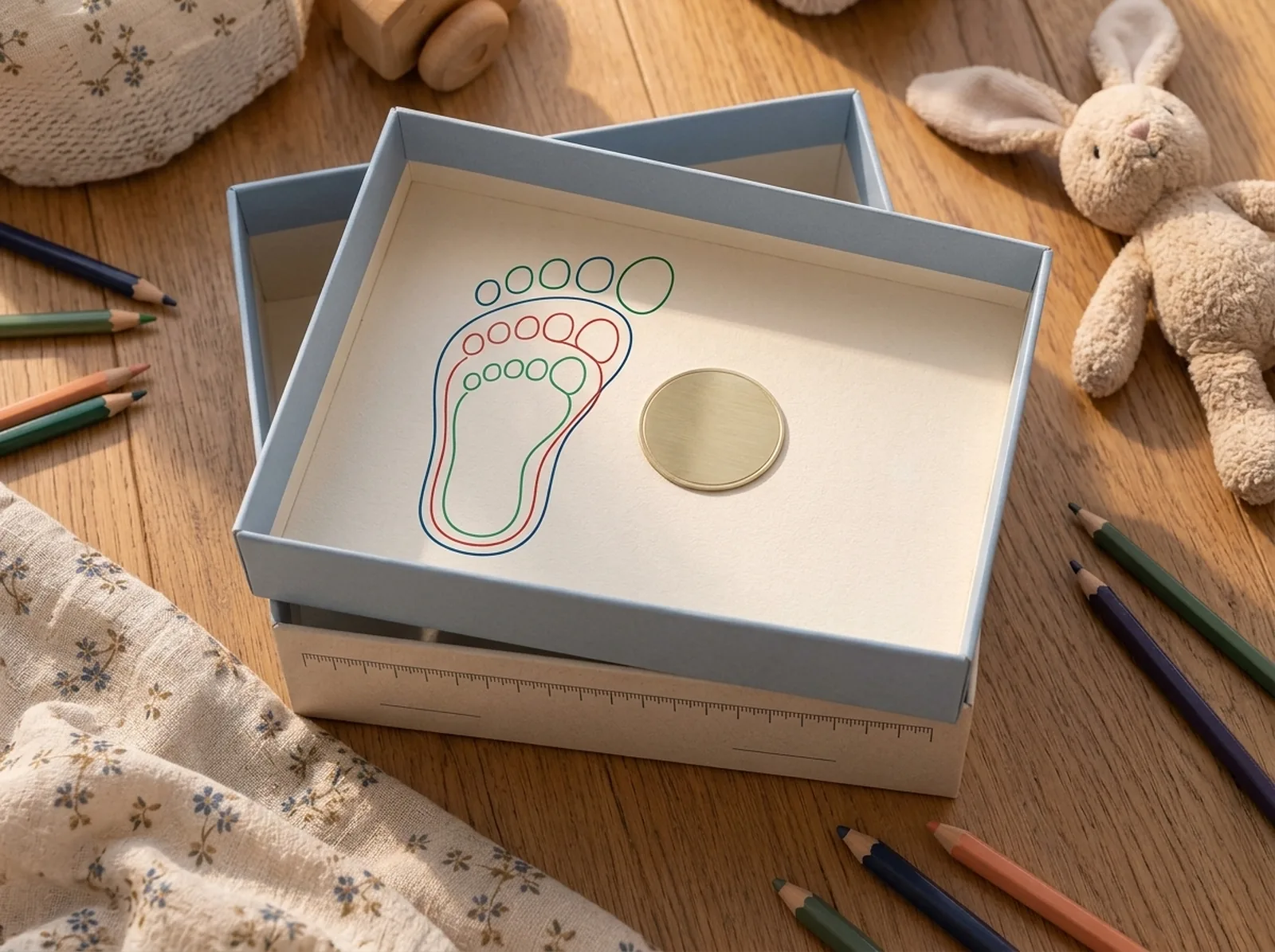
Misura
A foot-measuring lid and a growth record kept for years
How to use it
First Steps · Early Walker
On the outside of the blue lid there is a footprint and a 0–20 cm ruler, and along the side of the box runs a “Misura · Foot measurer” strip: rest your child’s heel against the wall and you can measure their foot. Inside, the lid is a blank page: at every measurement, trace around the foot and write down the date and the length. Over the years, the nested footprints become a keepsake.
- Stand the box against the wall, with your child’s heel touching the wall.
- Read the ruler line where the longest toe ends.
- Trace around the foot inside the lid, and write down the date and the length.
- Scan the QR code to add the measurement to the foot passport.
Printed on it: A footprint, a ruler, the words “A little bigger with every step” and a QR code
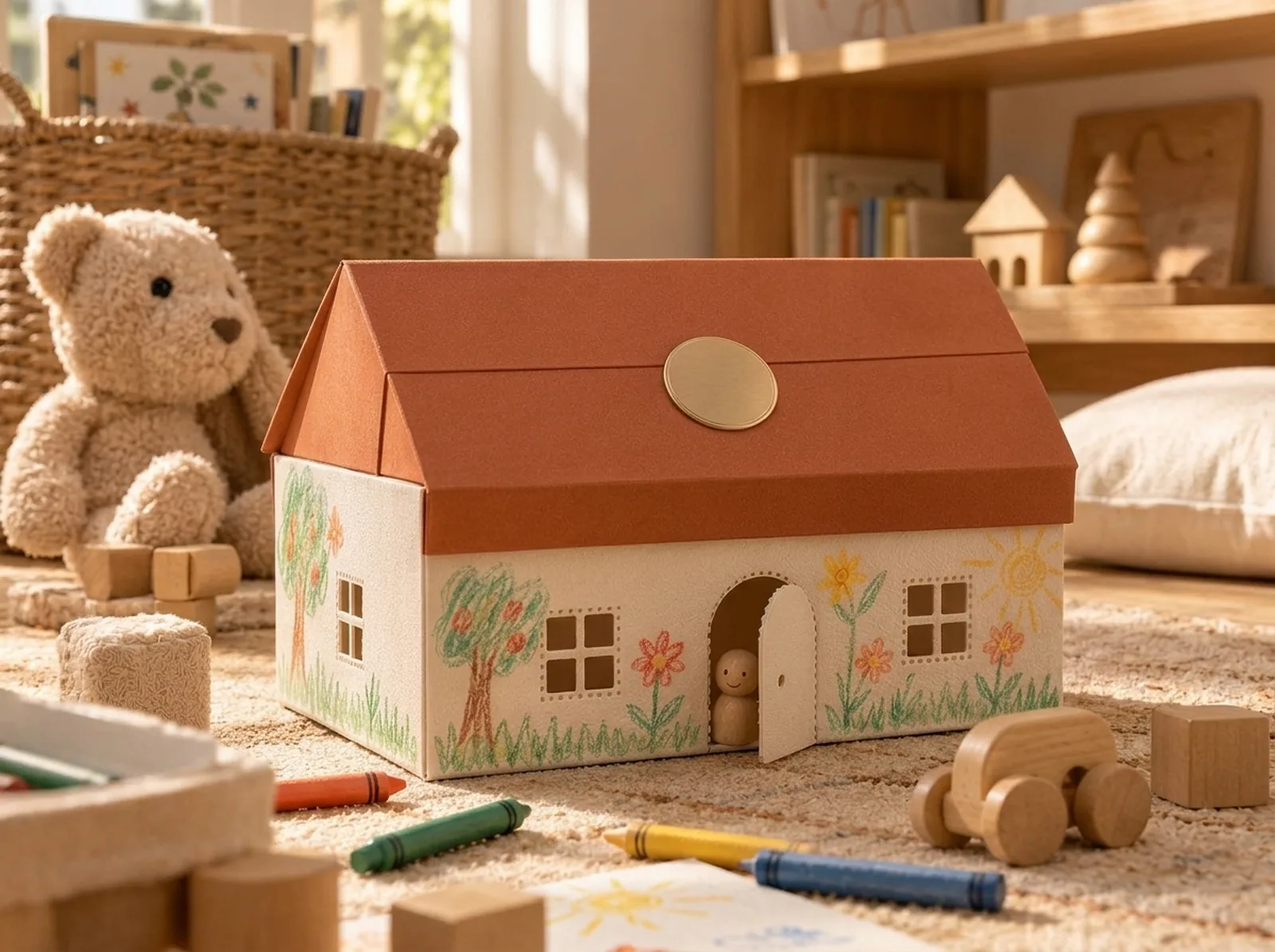
Casa
A toy house to paint and decorate, and a storage box
How to use it
First Steps · Early Walker
A terracotta-coloured roof for a lid, white walls, windows and a door that opens. The walls are left blank for painting: your child writes their name and draws trees and flowers. Once the shoes are out, the house becomes the place for small toys and the first shoes.
- Take out the shoes, then open the door and windows along the dotted lines.
- Paint the walls with crayons or watercolours.
- Close the roof, and the house becomes a storage box.
Printed on it: Only the outlines of the door and windows; the rest is left to the child
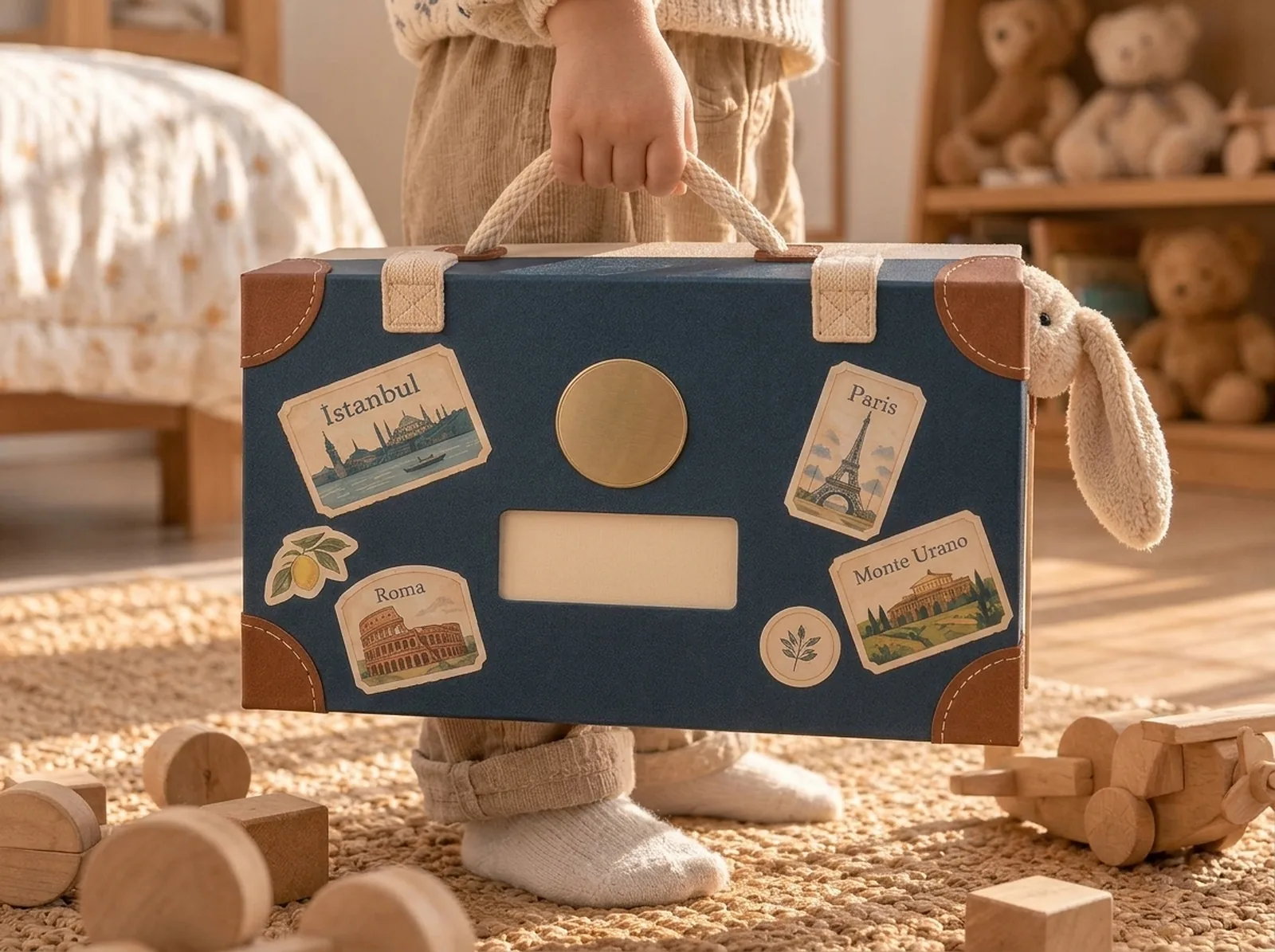
Passaporto
A toy suitcase with a rope handle
How to use it
Early Walker · Explorer
A navy suitcase, with a rope handle, leather-look corners and a name tag. It carries labels for Istanbul, Rome, Paris and Monte Urano. Every new pair brings a new city label, so the suitcase “travels” along with your child. The name tag has room for your child’s name and your family number.
- Thread the handle through the holes in the top of the box and tie it.
- Fill in the name tag.
- Stick on the city label that comes with each new pair.
Printed on it: City labels, a name tag and a “Famiglia No.” field
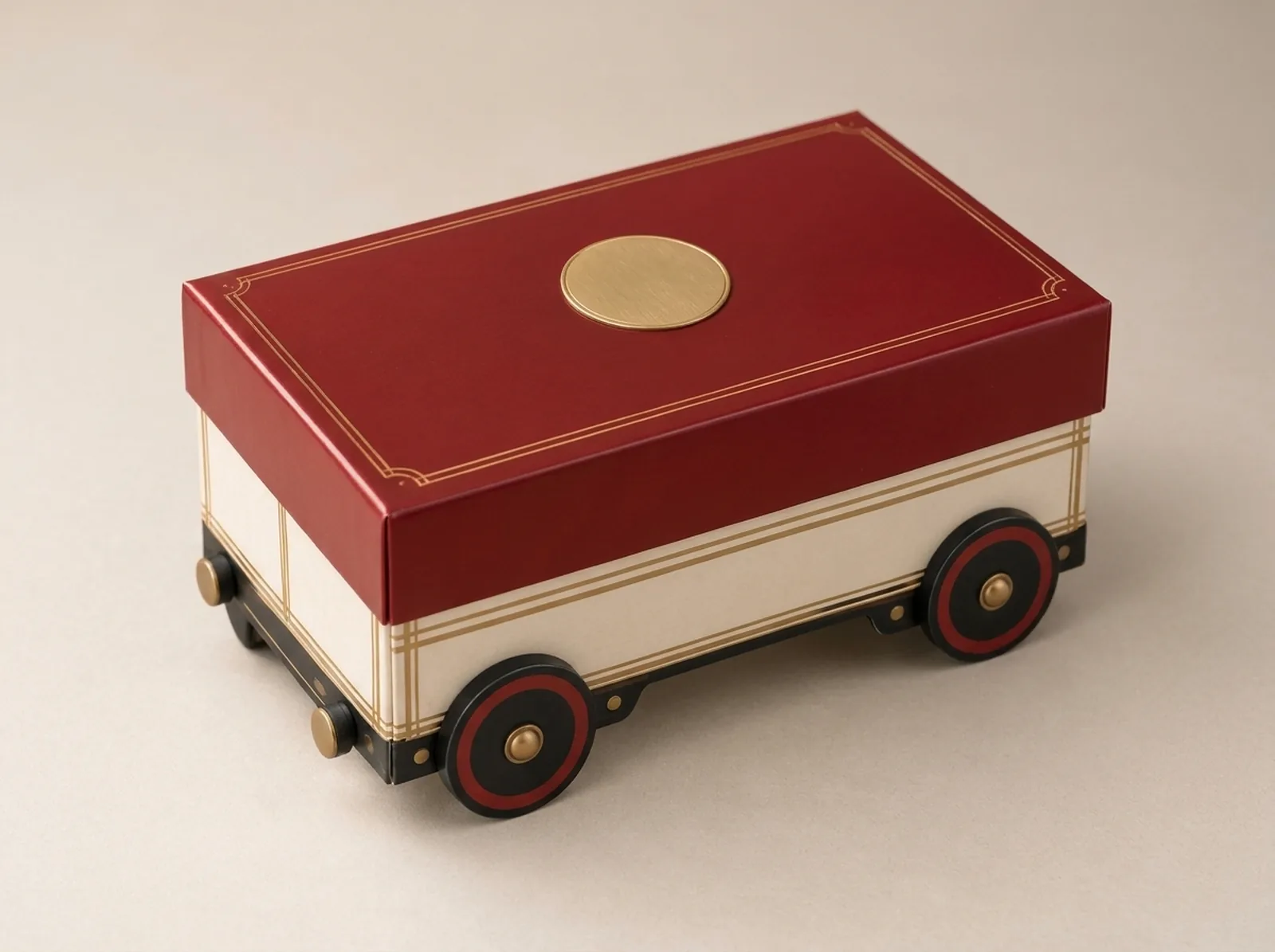
Vagone No.1
A train carriage on wheels; the train grows with every pair
How to use it
Early Walker
A carriage with a red lid, a cream body and four cardboard wheels. Every new pair arrives in the next carriage: Vagone No.2, No.3… The carriages link together, and over the years they make a train of your child’s shoe sizes.
- Fit the wheels into the slots on the sides.
- Open the hooks at the front and back of the carriage.
- When a new carriage arrives, link them with the hooks.
Printed on it: The carriage number and the size of the shoe inside
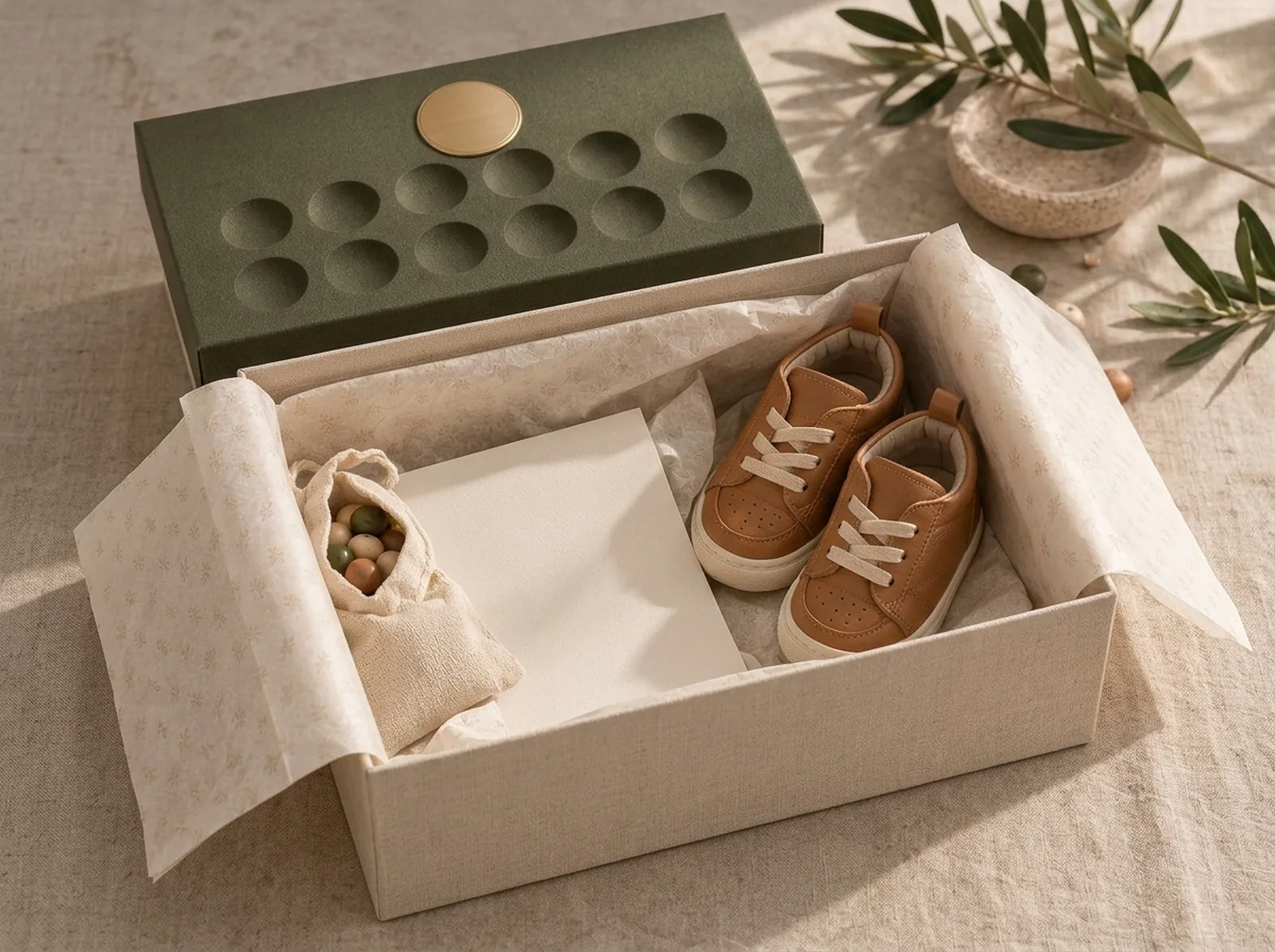
Gioco No.1 · Mangala
A twelve-pit mangala board
Safety: The seed stones are small parts; keep them away from children under 3.
How to use it
Explorer
The green lid has twelve pits: turn it over and it becomes a board for mangala, the Turkish version of mancala. Inside the box there is a cotton pouch filled with 48 seed stones and a card with the rules of the game. The Mangala page of the Play Atlas opens from the QR code in the box.
- Turn the lid over and put it on a table.
- Put four stones from the pouch into each pit.
- Read the rules card, or watch the video from the QR code.
Printed on it: 12 pits and 2 stores on the lid; a rules card inside
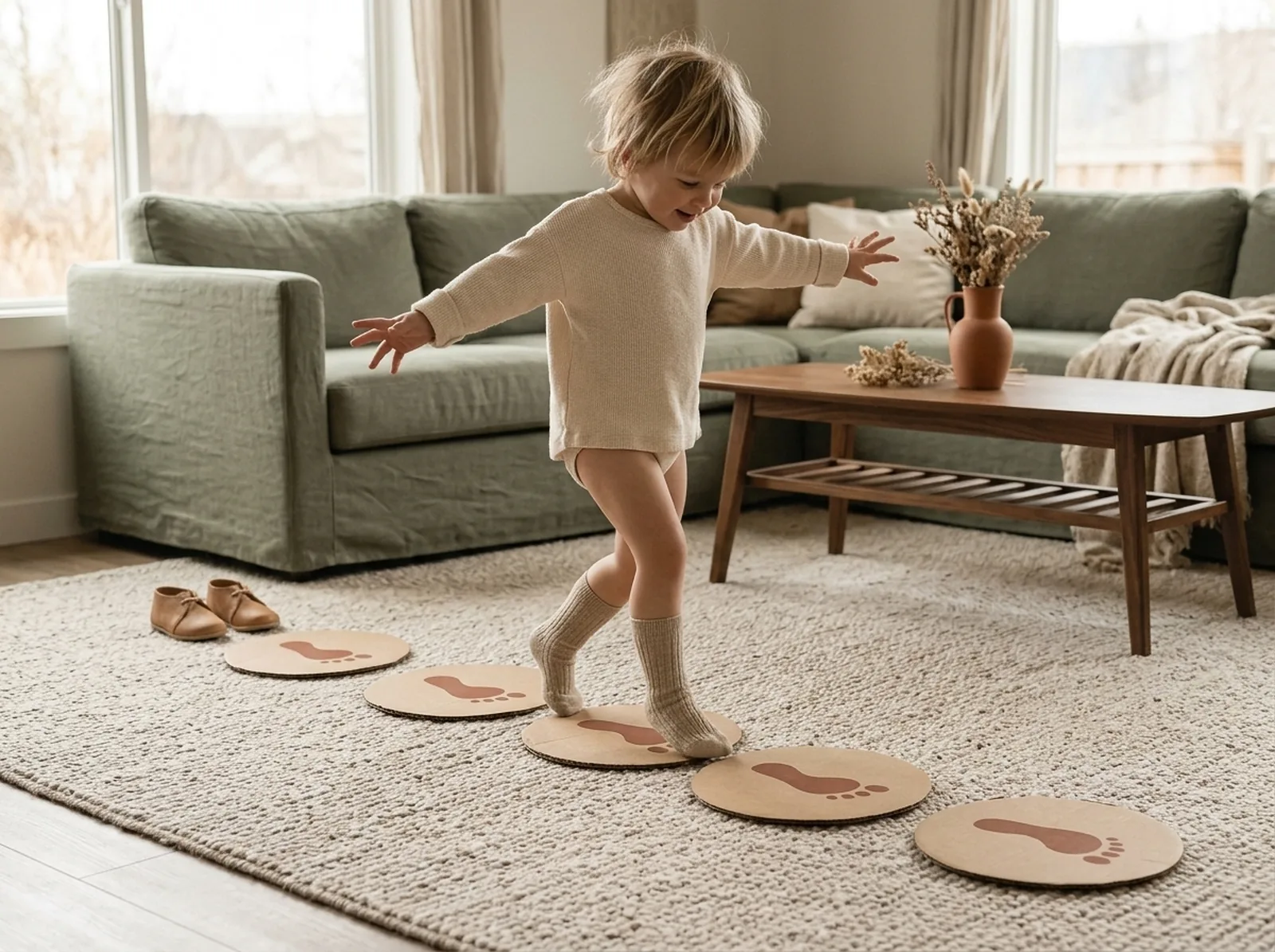
Percorso
Stepping stones laid out on the floor, and a balance course
Safety: On slippery floors, put a non-slip rug under the stones.
How to use it
Explorer
The lid, base and inner dividers of the box become six stepping stones to lay out on the floor. Each stone has a footprint and a task: one foot, two feet, heels, tiptoes. Your child builds their own course, and the box becomes a different game every day.
- Separate the pieces of the box along the dotted lines.
- Lay the stones on the floor, a step apart.
- Cross the course, doing the task on each stone.
Printed on it: Footprints and task symbols
No boxes for this stage.
Open the lid, hold up your phone.
The code inside the lid opens the box’s videos, games that suit it and the foot passport.
The videos are being filmed.
What is it made of?
The box is a toy, so we say plainly what goes into it.
Responsibility and transparency- FSC-certified, recycled card
- Water-based, non-toxic printing inks
- Slot-together joints instead of glue; no plastic, no magnets
- The medallion on the lid is embossed paper, not metal
- At the end of its life, it can go in with paper recycling