You’ll need
Setting up
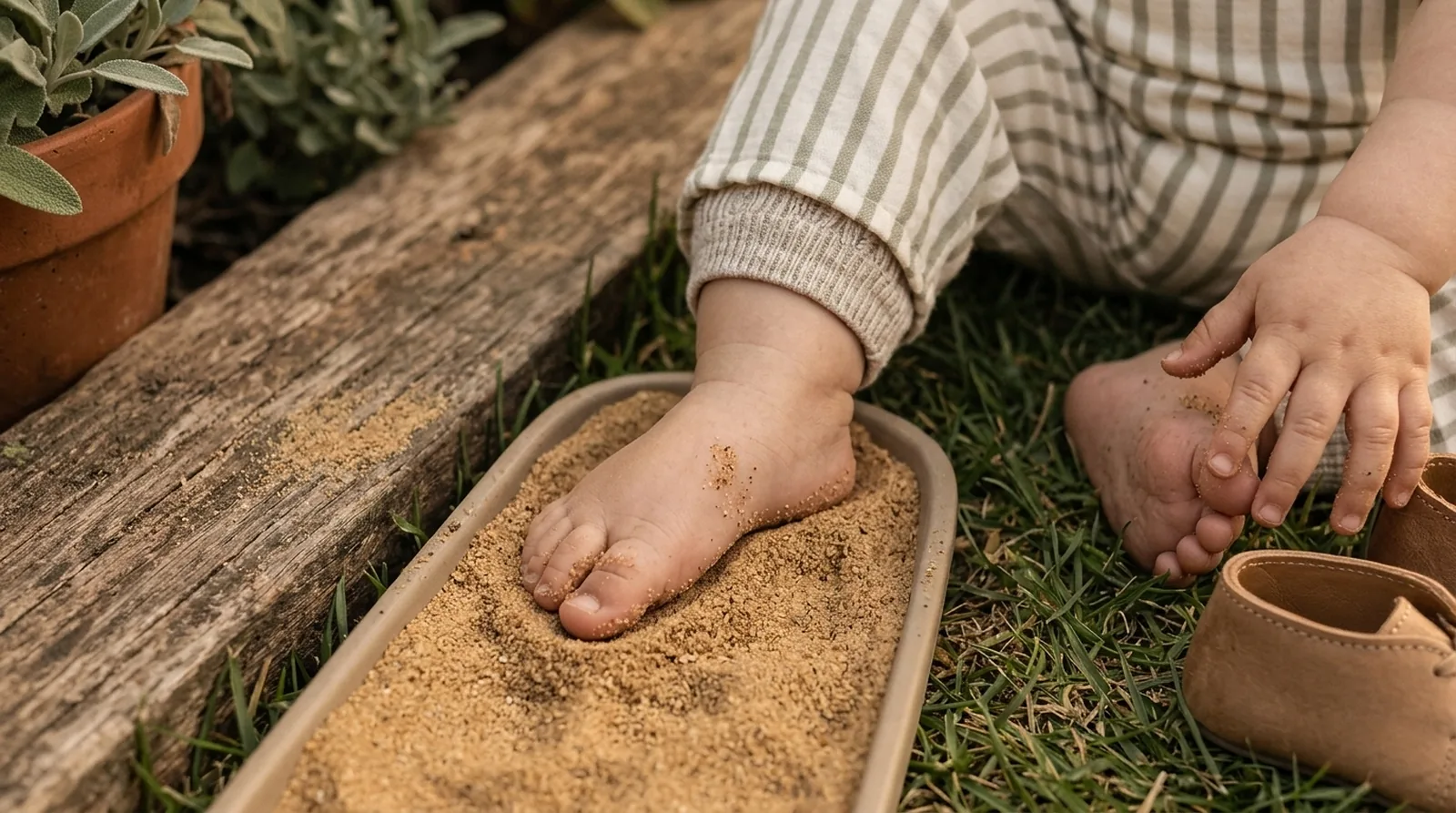
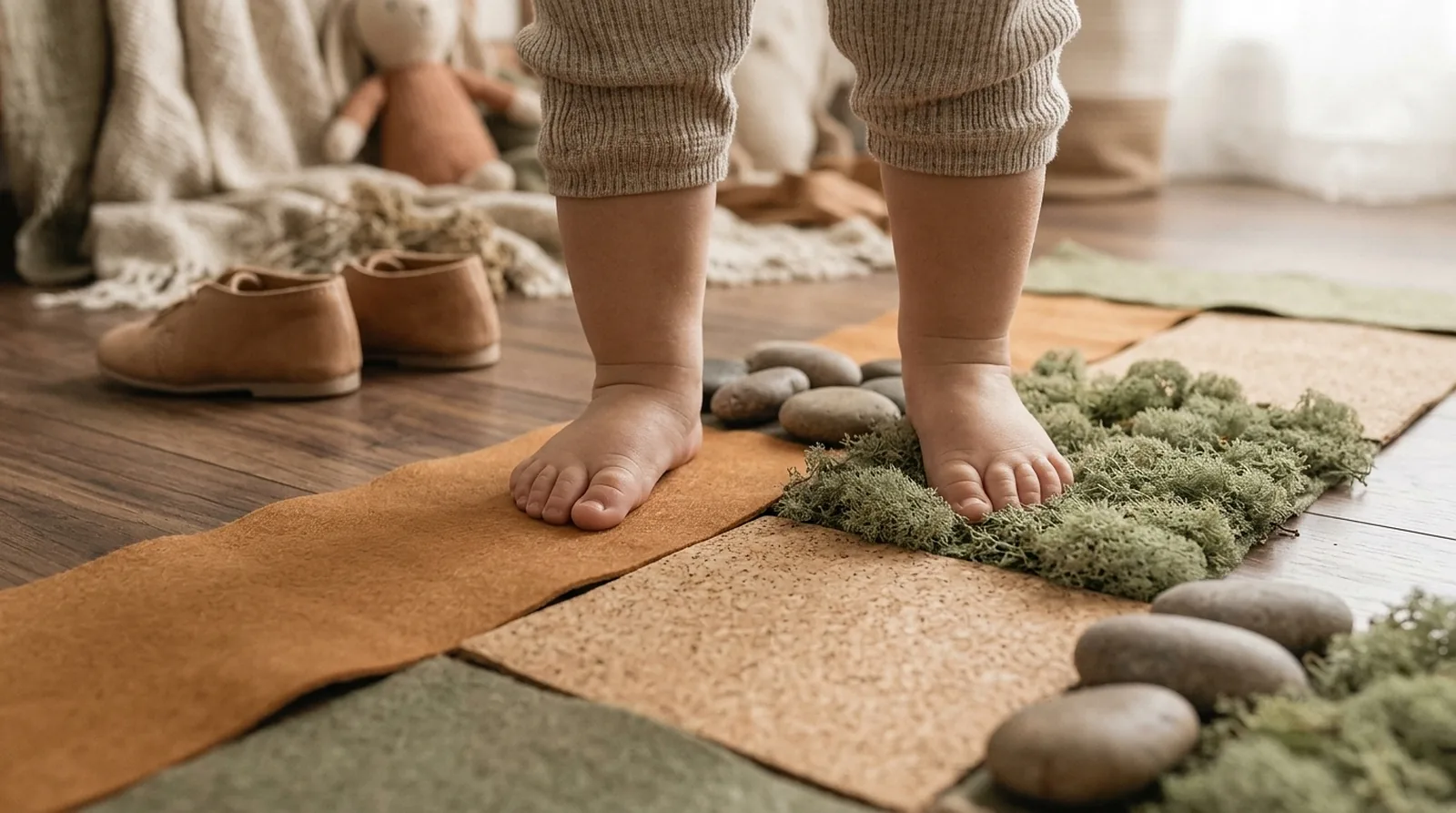
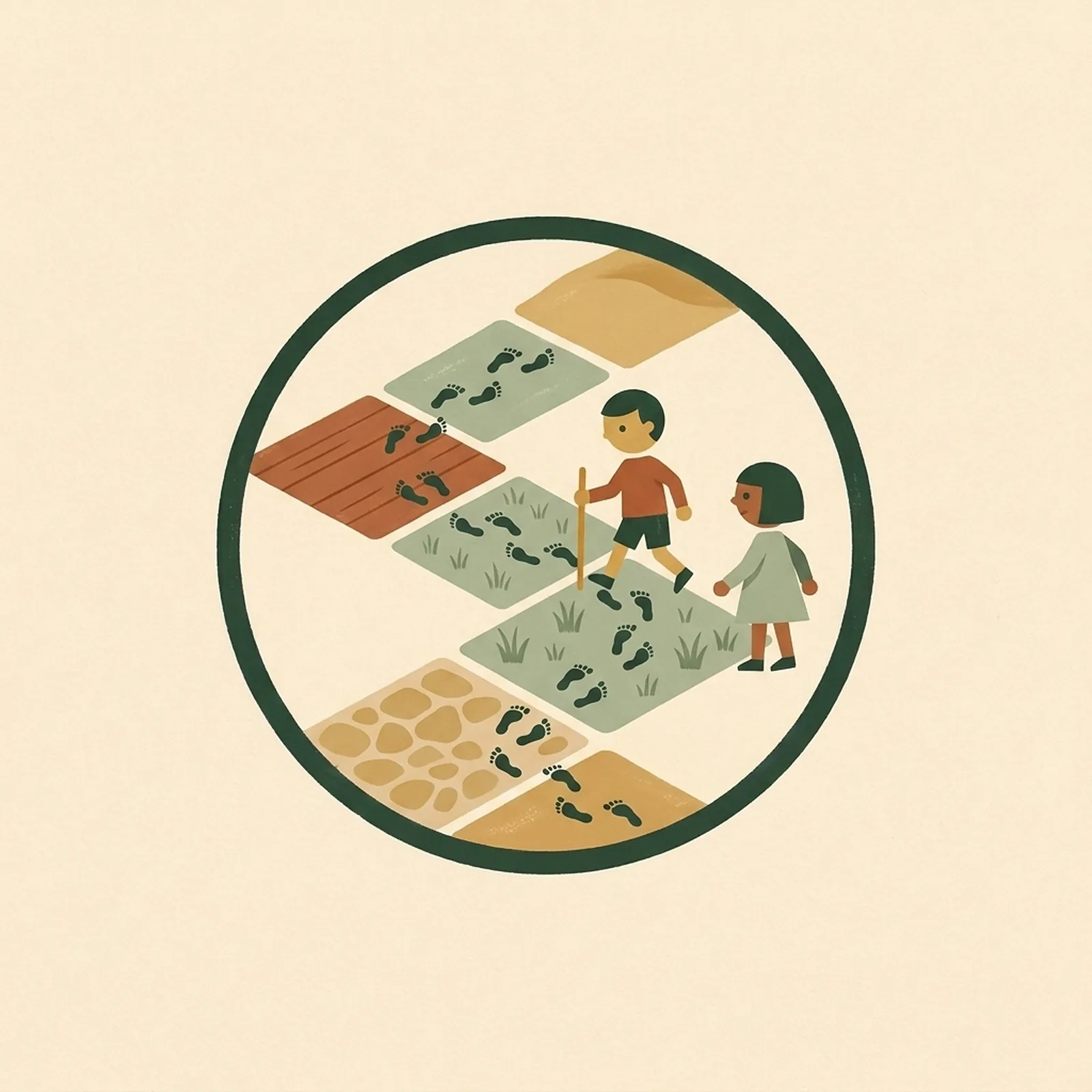
Lay the trays or box lids out in a row and put a different texture in each. Place the soft textures at the start and the end, and the hard ones in the middle. The lid of an Ottavino box can be used as a tray too.
The story of the game
Feet grow stronger by talking to the ground. A sensory path is the easiest way to set up that conversation on purpose, at home or in the garden. Babies who walk holding on can go along holding your hand; older children can walk with their eyes closed and guess.
How to play
- Your child stands barefoot at the start of the path.
- As they step on each tray, ask what they feel: is it cold, warm, prickly, tickly?
- For babies, hold out your hand and let them cross at their own pace.
- Older children can walk with their eyes closed and guess the texture.
Variations (2)
- A seasonal path: leaves in autumn, a cold tray of water in winter, wet sand in summer.
- A “home path” across wooden floors and rugs: the different floors from the kitchen to the living room.
For parents
Some children don’t like some textures, and that’s normal. Don’t insist; let them skip that tray. Don’t use small objects that could go in the mouth with babies.
What to wear on their feet
Bare feet.
Safety
With children under 3, don’t use small objects that pose a choking risk (rice, small gravel, marbles). The floor around wet trays can get slippery. Always play these games with an adult watching, in a way that suits your child’s age and the surface underfoot. Keep games with small pieces (marbles, five stones, mangala) away from children under 3.