Conscious cycle · 5 min read
Second-hand shoes: when are they suitable, and what to look for?
Children’s shoes are often outgrown before they wear out. Second-hand shoes can be a good option; but not every shoe suits every child.
Ece Demirtaş, MSc PT
This content is for general information and is not a substitute for medical advice. If you have any concerns about your child’s feet, talk to your paediatrician or a paediatric physiotherapist.
In short
- Controlled research on this is limited; the advice rests on general principles of hygiene and fit.
- Shoes whose sole and insole have clearly sunk to one side carry the previous owner’s footprint.
- Lightly worn shoes that have kept their shape and been hygienically cleaned can be a good option.
- In our Take Back programme, we assess every pair against these criteria.
First, an honest note
There is almost no reliable research that looks directly at how second-hand children’s shoes affect foot health. The advice in this article rests on general knowledge about shoe fit and hygiene. We want to say that up front.
What to look for
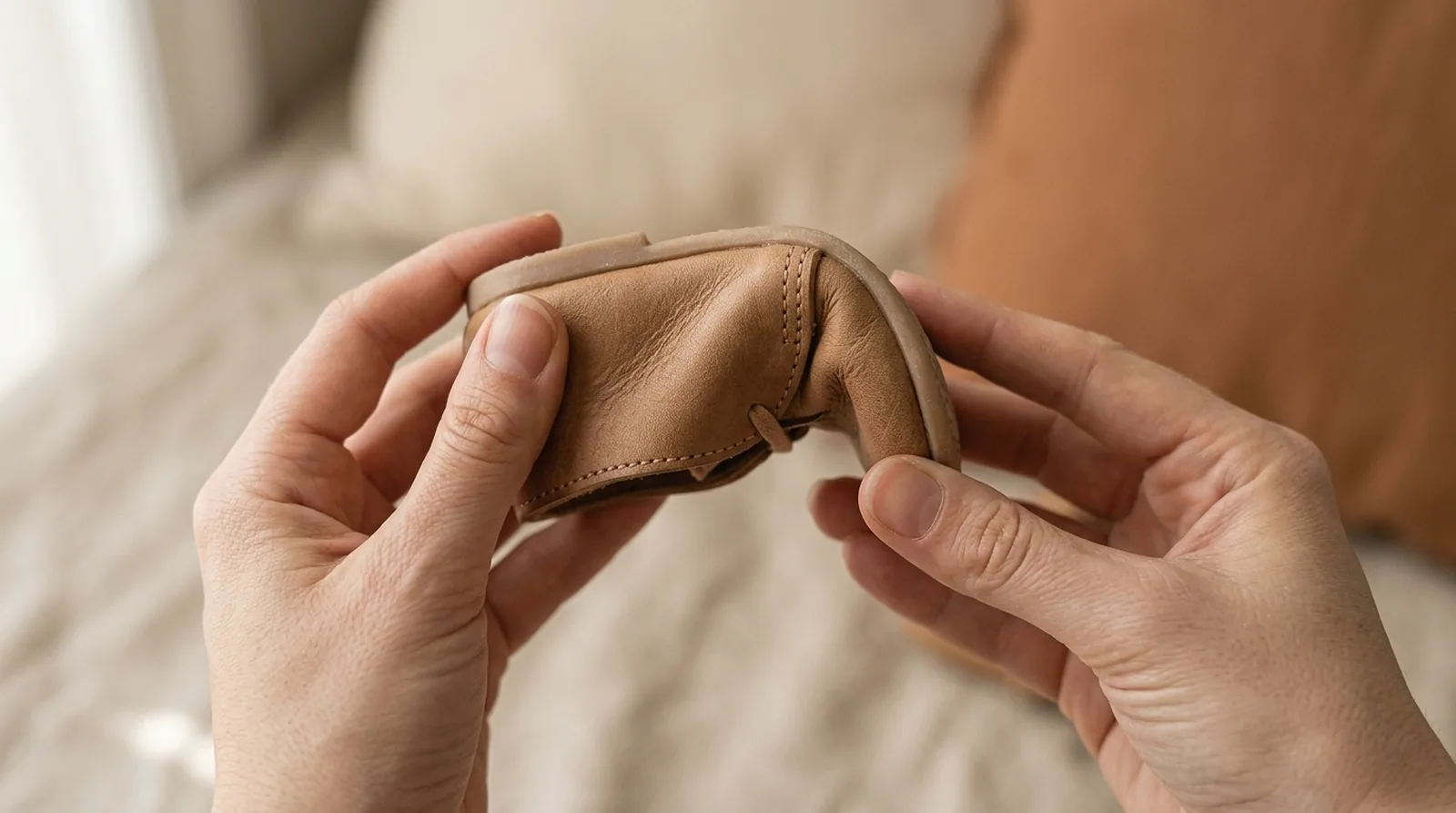
- The sole: is one side noticeably worn? When you put the shoe on a flat table, does it lean to one side?
- The insole: have the previous owner’s toe and heel prints made a deep hollow? If it’s removable, replace it with a new one.
- The heel: is it crushed or torn inside?
- Seams and fastening: does the hook-and-loop still hold, are the seams sound?
- The size: even second-hand, choose by measuring the foot.
Hygiene
Wipe the inside of leather shoes with a cloth dampened with warm, lightly soapy water, and let them dry completely. If the insole is removable, clean it separately or replace it. We advise against using shoes with a history of fungal infection.
What do we do in Take Back?
Every pair that comes back to us is assessed one by one in the workshop. Those that have kept their shape get a new insole, are hygienically cleaned, and go to children who need them. Those with collapsed or worn-out soles are recycled by our certified partners. We share openly on our Transparency page how many pairs went which way.
When to ask a specialist
If you notice redness, itching or a change in your child’s walking with a second-hand shoe, stop using it and, if needed, talk to your paediatrician.
Free 20-minute call with a specialistSources
- General guideline Controlled research on second-hand children’s shoes is limited; the advice here rests on general principles of hygiene and fit.
- Review Morrison SC, Price C, McClymont J, Nester C. Big issues for small feet: developmental, biomechanical and clinical narratives on children's footwear. J Foot Ankle Res. 2018;11:39.
Not a substitute for medical advice. If you have any concerns about your child’s feet, talk to your paediatrician or a paediatric physiotherapist.