Development · 5 min read
A wide toe box: room for the toes
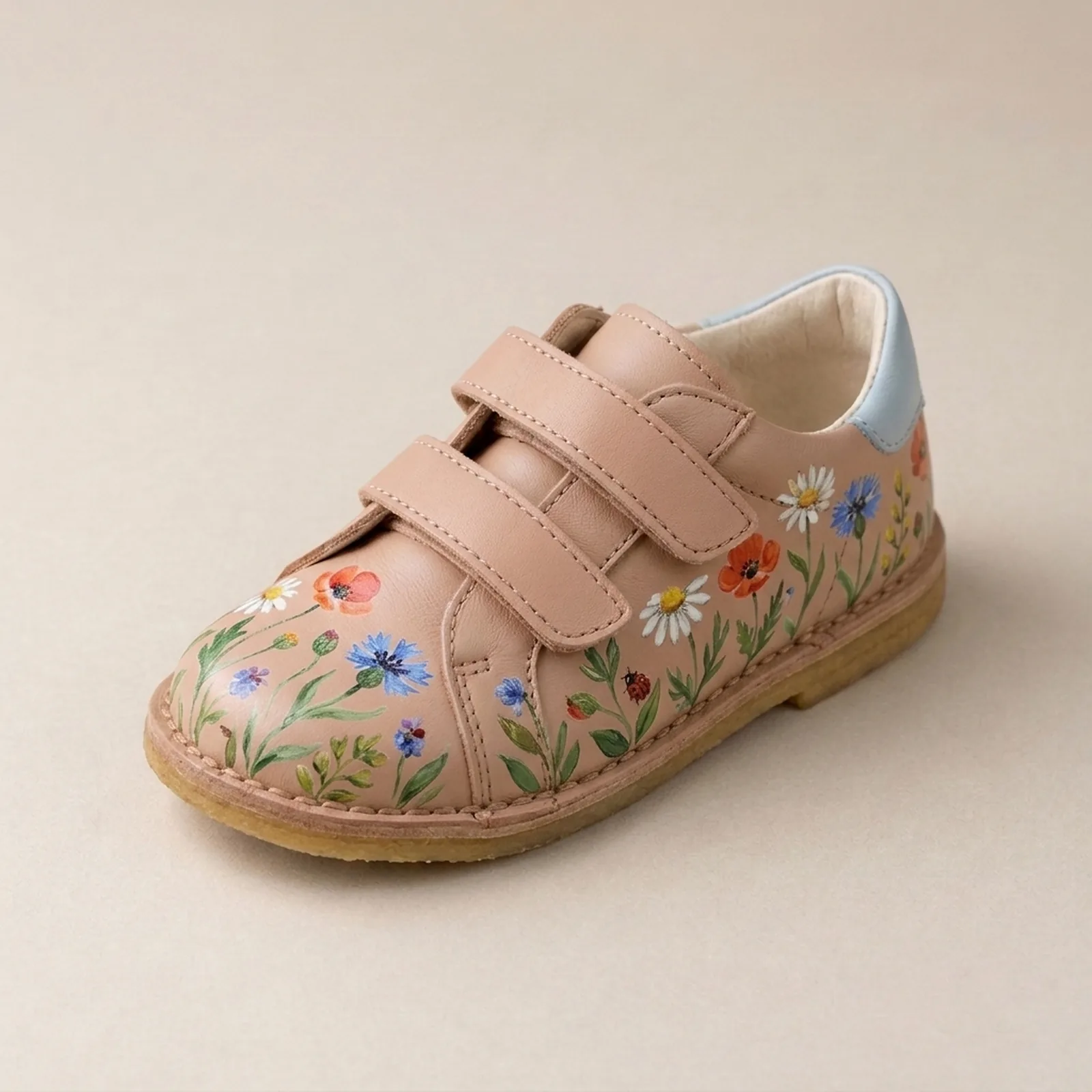
A child’s foot is wide at the front, and spreads even more when walking. Shoes with a narrow toe box don’t let the toes spread.

Assoc. Prof. Dr Zeynep Akın
This content is for general information and is not a substitute for medical advice. If you have any concerns about your child’s feet, talk to your paediatrician or a paediatric physiotherapist.
In short
- A child’s foot is longer and wider when walking than when standing still.
- Some studies have found a link between short, narrow shoes and the angle of the big toe.
- Choose a shoe with a rounded, wide toe box where the toes can spread.
The foot grows when it moves
A study in Germany that measured developing children’s feet in three dimensions showed that the foot gets longer and wider when walking than when standing still. So a shoe should be chosen for the moving foot, not just the foot at rest.
The effect of narrow, short shoes
A study in Austria found that the big toe angled more noticeably towards the other toes in children who wore shoes that were too short. This is an association, not proven cause and effect; but it is a good reason to pay attention to both the length of a shoe and the width of its toe box.
What to look for
- The toe box should be rounded and wide; avoid pointed toes.
- The widest part of the shoe should be in line with the toes.
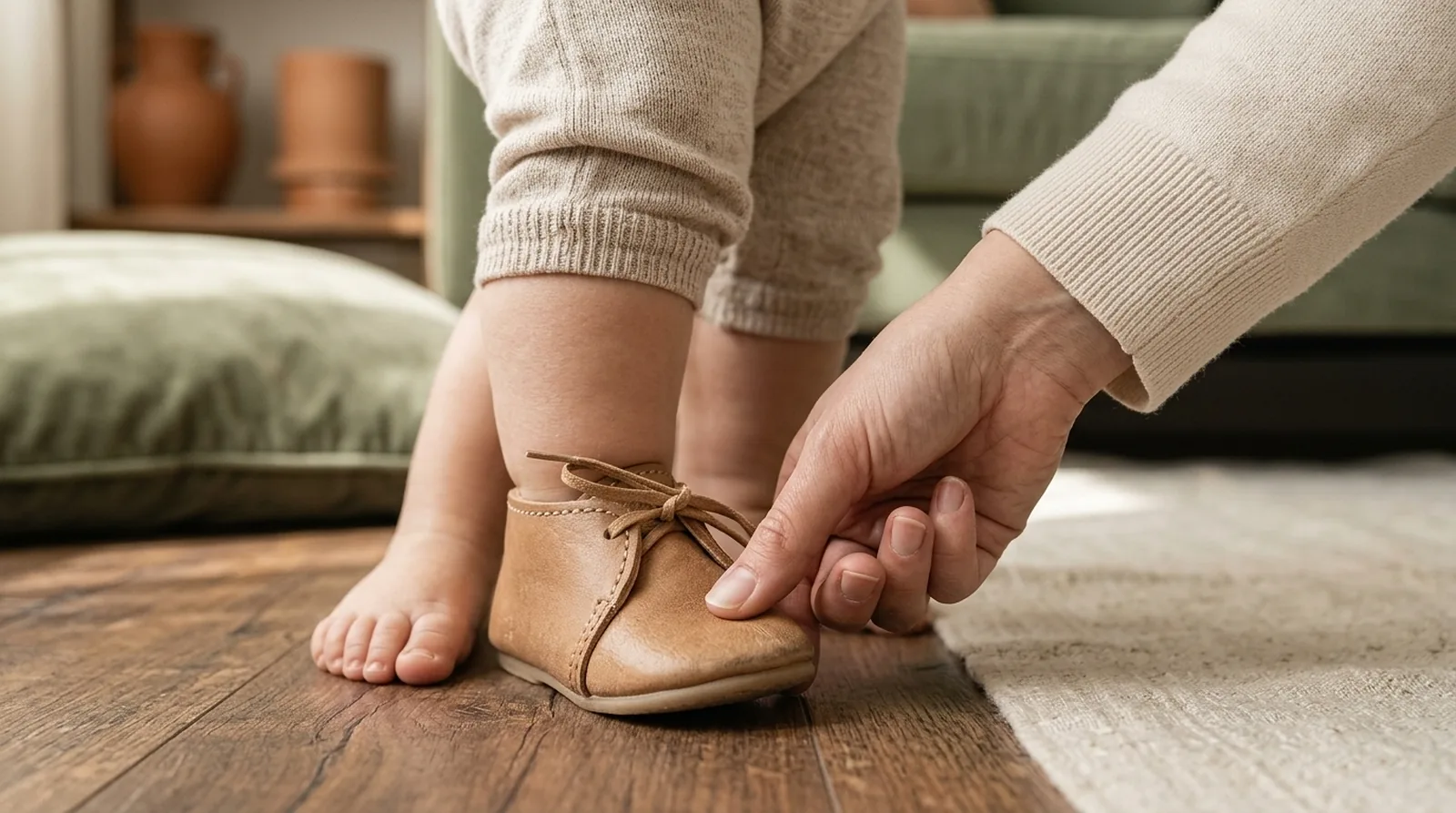
- While your child is standing, gently squeeze the toe of the shoe from the sides: the toes shouldn’t feel squashed.
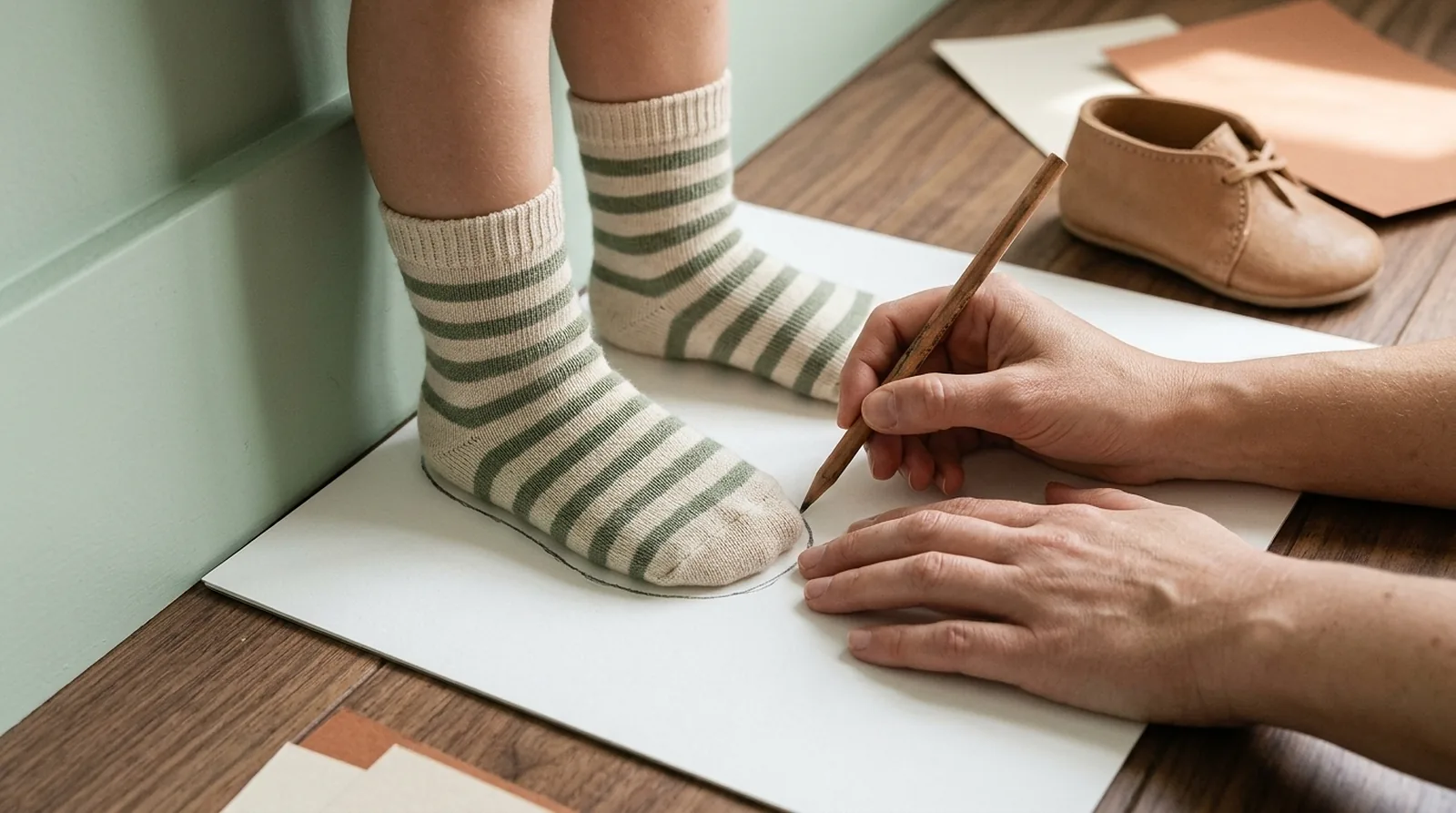
- Take out the insole and stand your child’s foot on it: the foot shouldn’t spill over the edges.
Our lasts
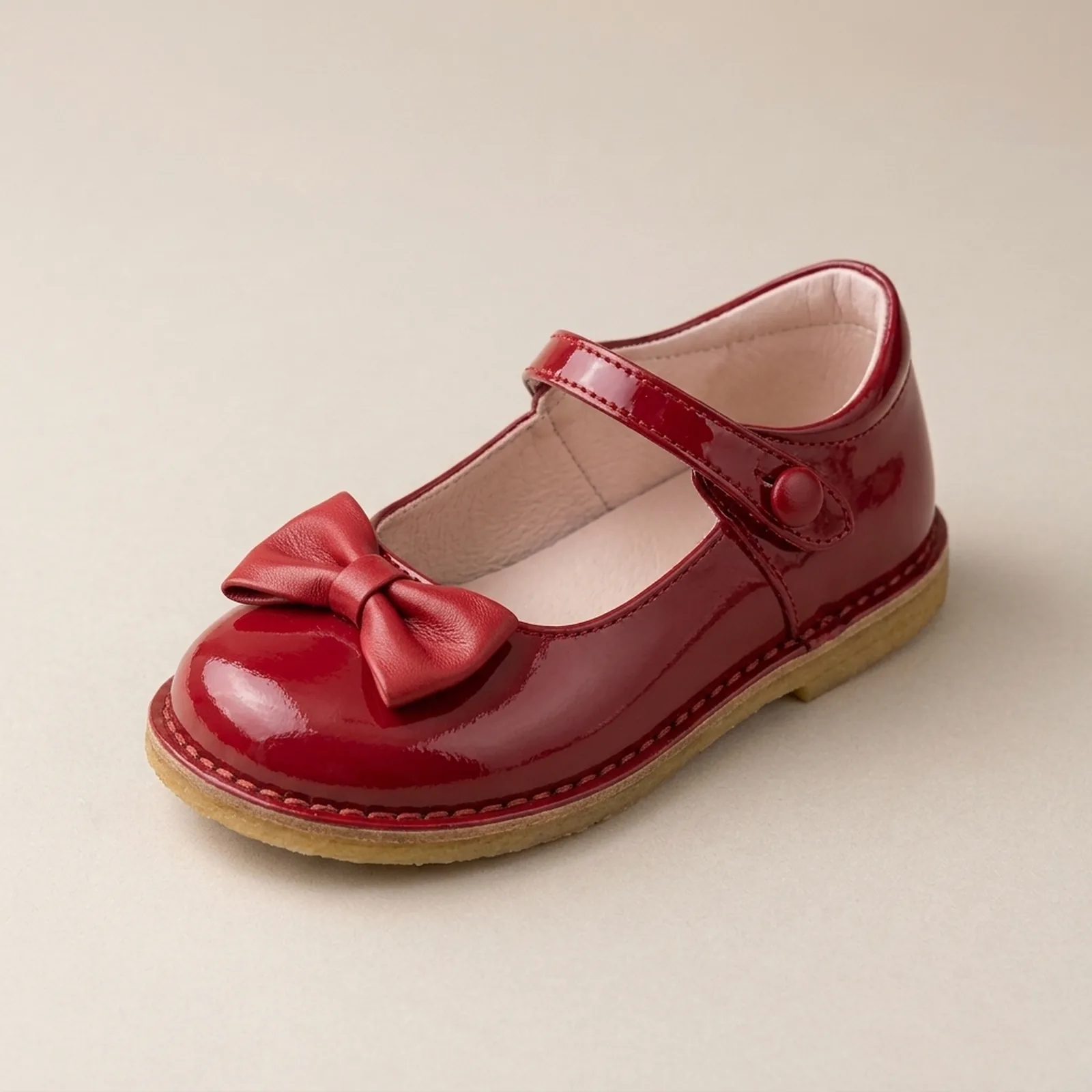
We draw our lasts to leave about 8 mm of room for the toes to spread. We even redrew traditionally narrow shapes such as the Mary Jane with a wider toe. This comes at a cost: on some feet our shoes may look “wide”. That is a choice we made deliberately.
When to ask a specialist
If you notice a clear angling of the big toe, a corn, redness or an ingrowing toenail, talk to your paediatrician.
Free 20-minute call with a specialistSources
- Research Barisch-Fritz B, Schmeltzpfenning T, Plank C, Grau S. Foot deformation during walking: differences between static and dynamic 3D foot morphology in developing feet. Ergonomics. 2014;57(6):921–933.
- Research Klein C, Groll-Knapp E, Kundi M, Kinz W. Increased hallux angle in children and its association with insufficient length of footwear: a community based cross-sectional study. BMC Musculoskeletal Disorders. 2009;10:159.
- Review Morrison SC, Price C, McClymont J, Nester C. Big issues for small feet: developmental, biomechanical and clinical narratives on children's footwear. J Foot Ankle Res. 2018;11:39.
Not a substitute for medical advice. If you have any concerns about your child’s feet, talk to your paediatrician or a paediatric physiotherapist.