Six stops, one artisan, one pair.
The smaller the foot, the smaller the margin for error. At every stop, we tell you whose hands the pair is in, and for how long.
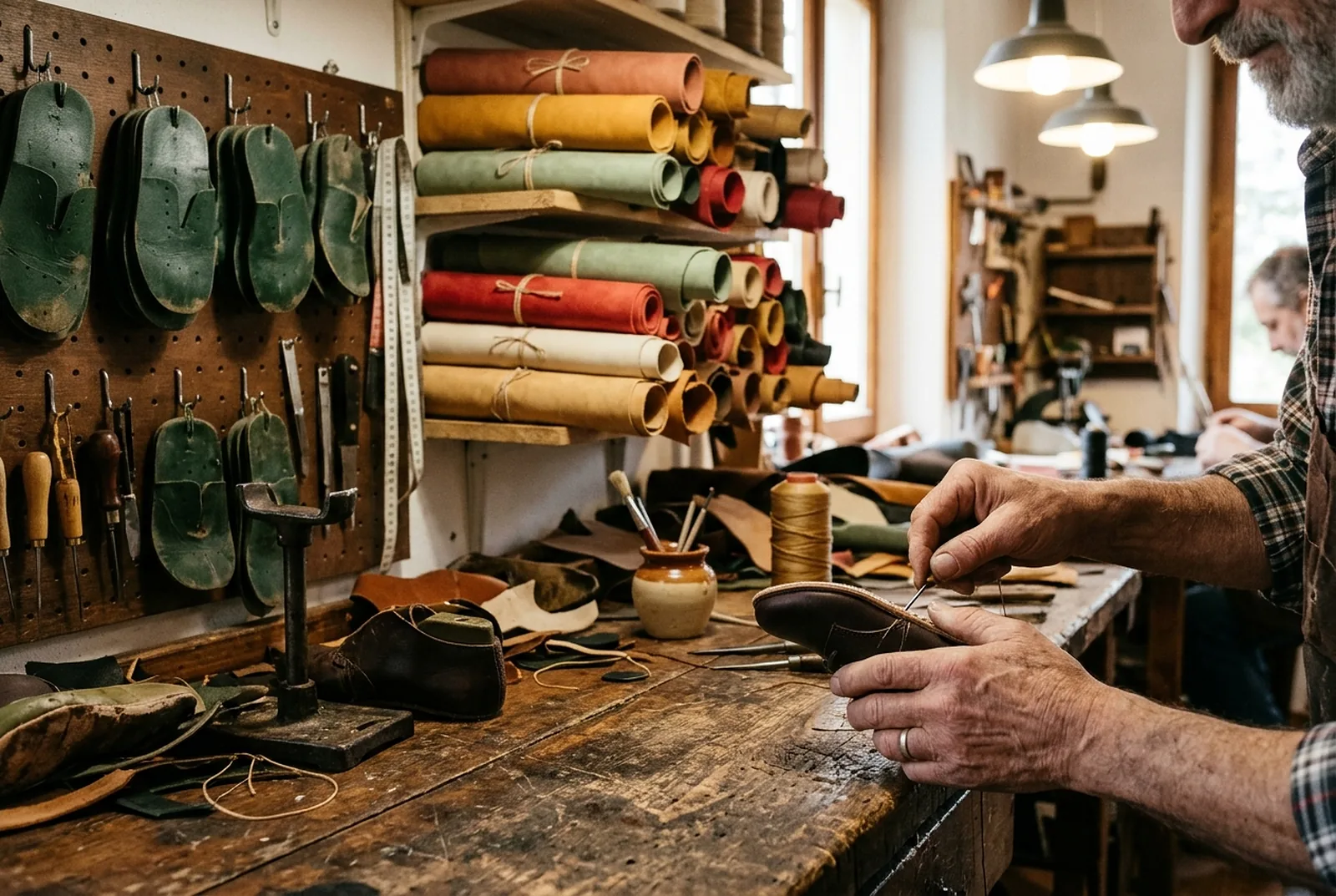
Salvia: 4 hours of work per pair, hand-stitched at Rita Marconi’s bench.
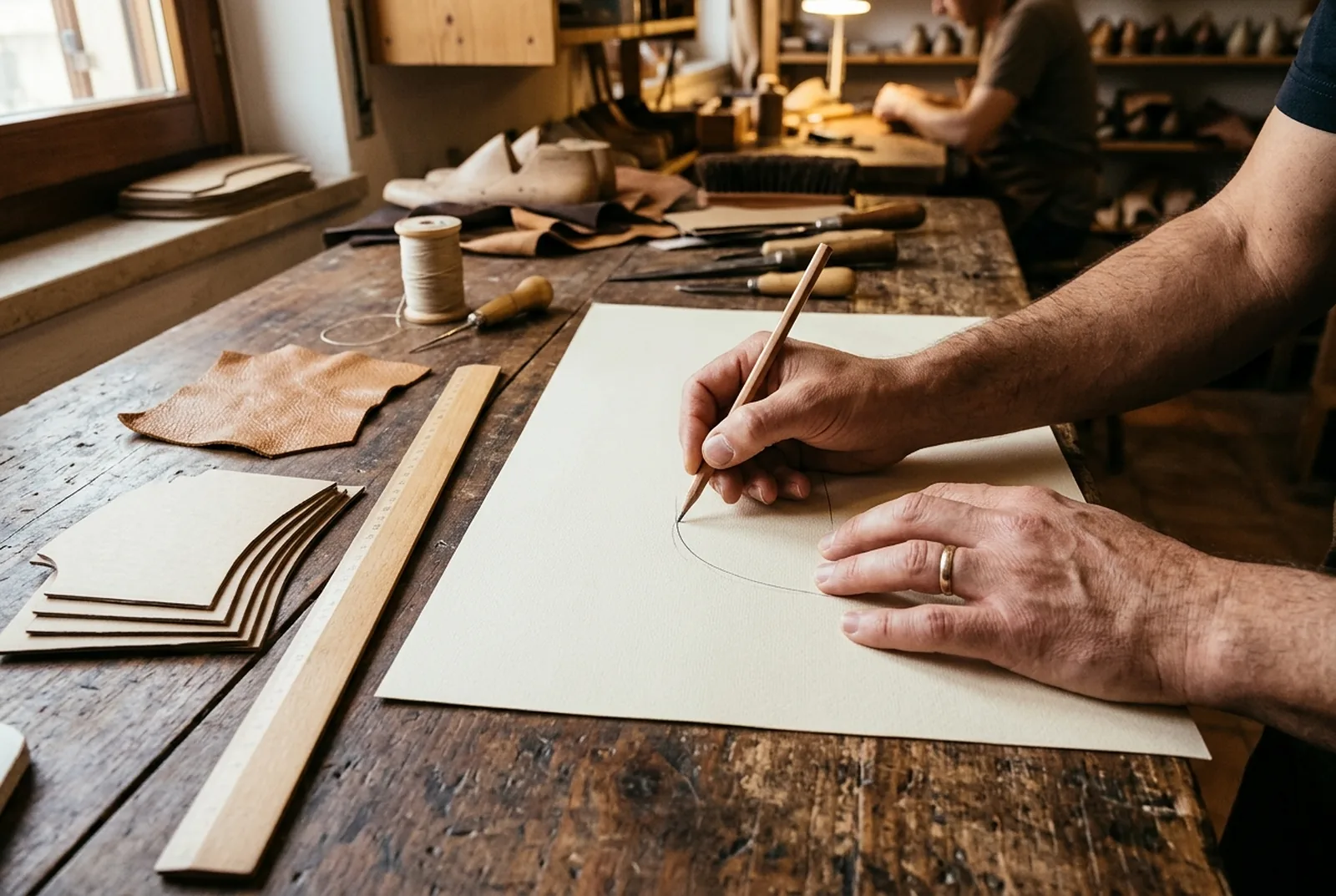
Stop 1 Disegnato · Design · Monte Urano
It starts on paper
A pattern goes through three prototypes on average.
Read more
Elena Vitali first draws every model on paper, then redraws the pattern with feedback from paediatric physiotherapists and the Founding Families. A wide toe box, a flat sole, a flexible forefoot: the same three rules in every pattern.
Salvia at this stop
Through 2025 and 2026 the last was redrawn three times, based on foot measurements from 41 children in our Founding Families.
Elena Vitali · Designer and workshop owner
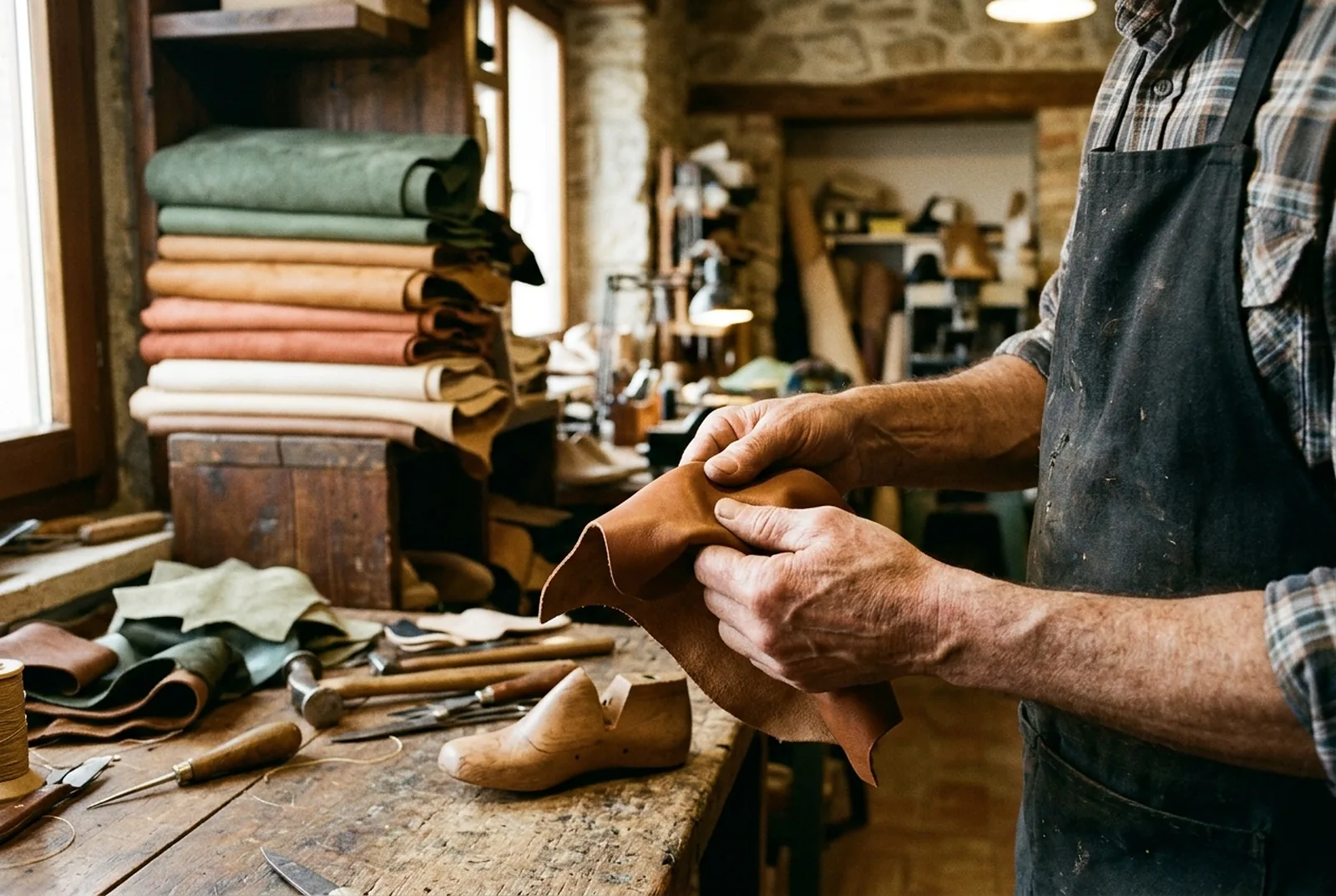
Stop 2 Pelle · Leather · Santa Croce sull’Arno, Tuscany
The leather is chosen
About 20% of each hide is unsuitable for children’s shoes; it is set aside and used for small accessories.
Read more
Vegetable-tanned leather from an LWG-certified tannery in Tuscany is checked by hand in the workshop. Areas that are scarred, stained or thin are marked and kept out of the cut.
Salvia at this stop
The leather comes from Santa Croce sull’Arno. Every hide is checked by hand, and any flawed areas are left out of the cut.
Elena Vitali · Designer and workshop owner
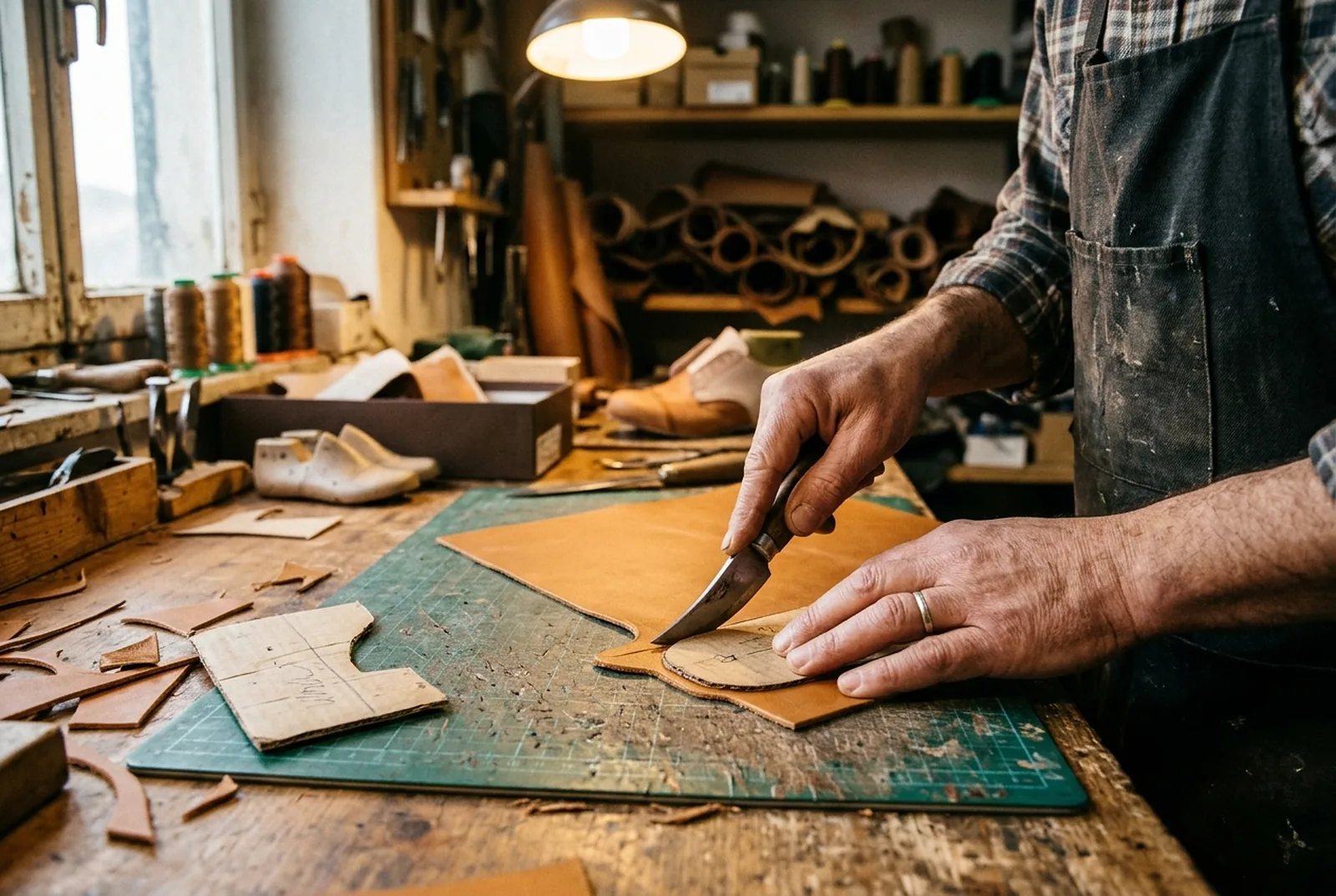
Stop 3 Taglio · Cutting · Monte Urano
Cut by hand
Between 6 and 16 pieces are cut for one pair.
Read more
Every piece is cut by hand, with metal-edged card templates and a sharp knife. Each one is laid along the leather’s direction of stretch, so the shoe bends in the right place.
Salvia at this stop
11 pieces are cut by hand for each pair.
Marco Properzi · Pattern maker and lasting master
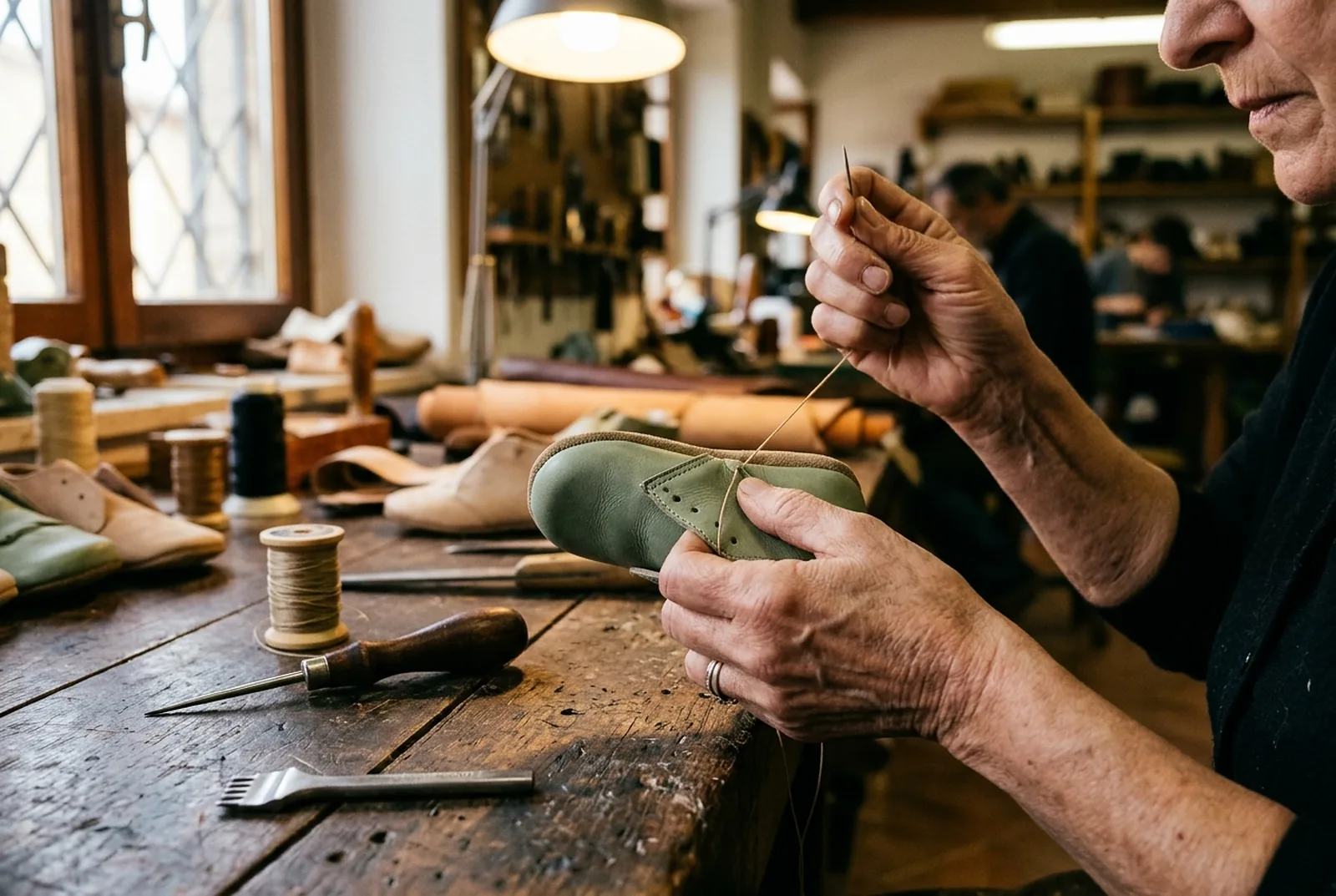
Stop 4 Cucito a mano · Hand-stitching · Monte Urano
Stitched by hand
About 4 hours per pair on average, roughly 2 of them hand stitching.
Read more
The edges, the decorative perforations and the inner seams that touch the foot are all sewn by hand. The machine is used only for long, straight seams.
Salvia at this stop
The flower perforations and edge stitching are done by hand: about 2 hours per pair.
Rita Marconi · Hand-stitching master
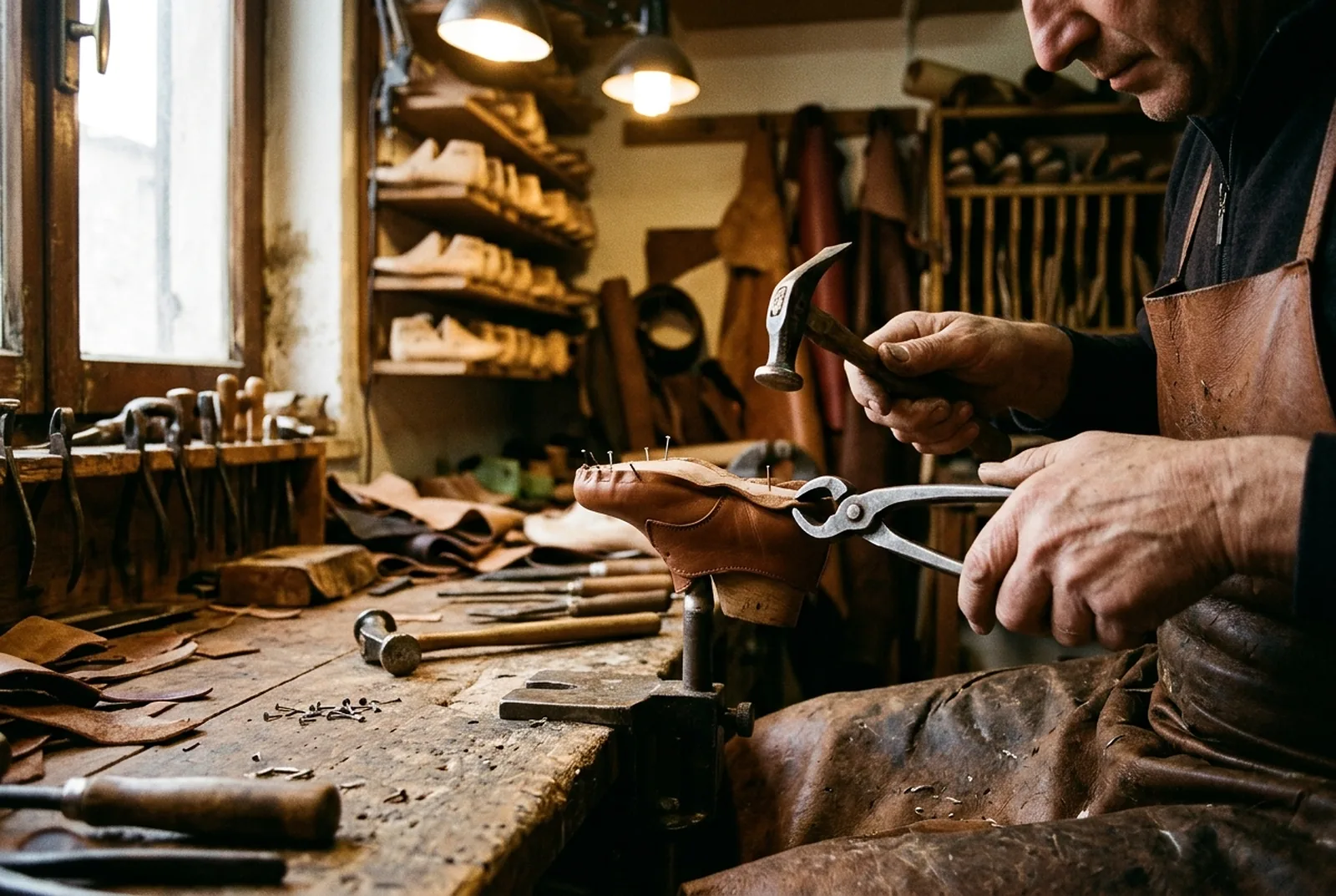
Stop 5 Montaggio · Assembly · Monte Urano
Shaped on the last
Every pair spends at least 12 hours on the last.
Read more
The upper is stretched over a wooden last and left to rest overnight, then the sole is stitched on. Glue is used only for a temporary hold, and where water must not get in.
Salvia at this stop
The sole is stitched on over the last; glue is used only to hold things in place temporarily.
Marco Properzi · Pattern maker and lasting master
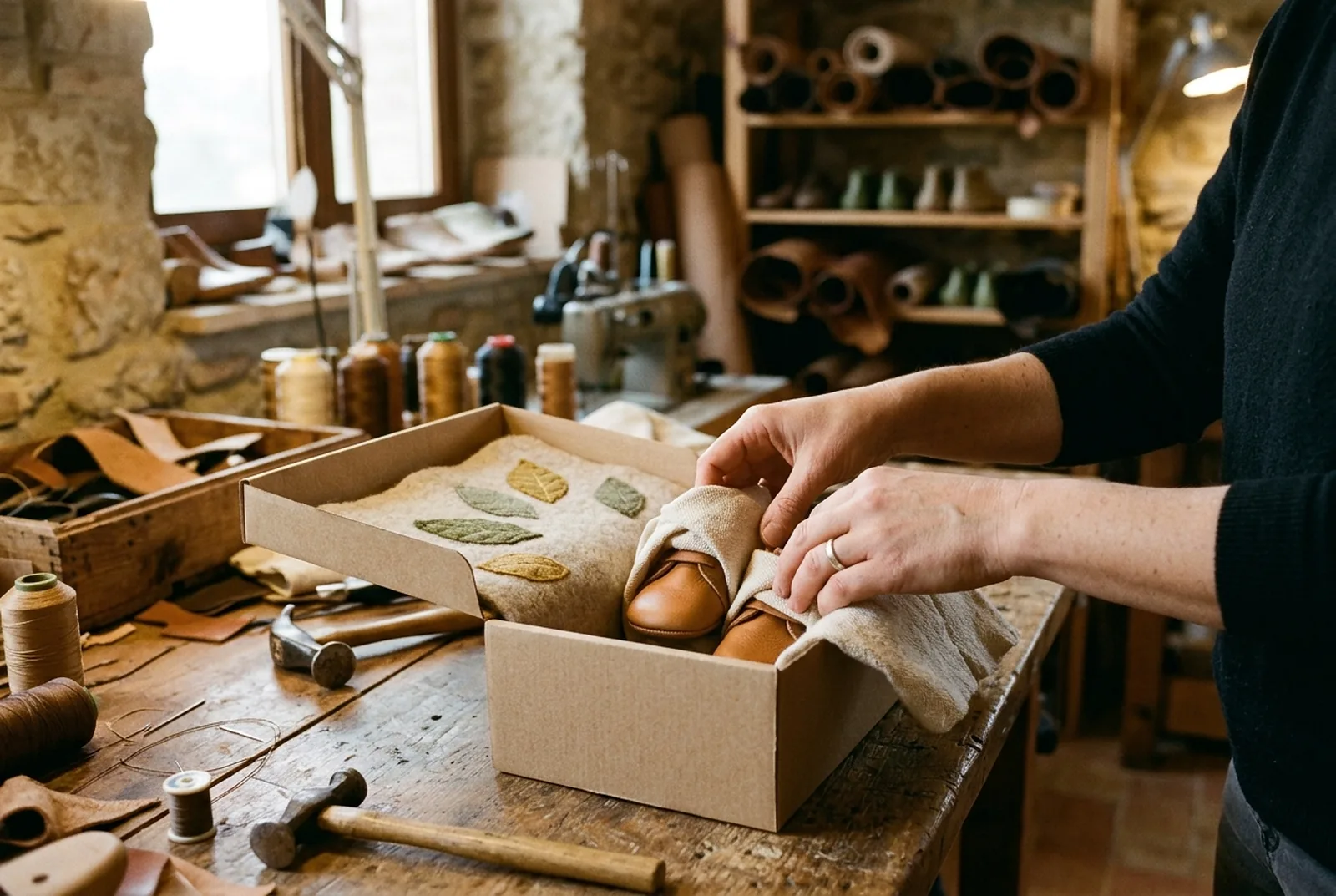
Stop 6 Consegnato · Delivery · Monte Urano → Istanbul
In a box that becomes a play mat
From the workshop to your door in 9 days, on average.
Read more
After a final check, the pair goes into the living box made in Fabriano, then travels to our warehouse in Istanbul, and from there to your home.
Salvia at this stop
Comes in the Misura box, whose lid is a foot measurer.
Giulia Rossetti · Illustrator, hand painting and box design
How many hours does a pair take?
On average, 4.1 hours. A soft first shoe takes two hours, a lined boot six.
- NeveEarly Walker6 hoursMarco Properzi
- CavallinoExplorer6 hoursMarco Properzi
- GiardinoEarly Walker5.5 hoursGiulia Rossetti
- BoscoExplorer5.5 hoursMarco Properzi
- PasserottoFirst Steps4.5 hoursMarco Properzi
- PedaleExplorer4.5 hoursMarco Properzi
- SalviaFirst Steps4 hoursRita Marconi
- FioccoEarly Walker4 hoursRita Marconi
- OlivoEarly Walker4 hoursMarco Properzi
- RondineExplorer4 hoursMarco Properzi
- TrifoglioEarly Walker3.5 hoursMarco Properzi
- NuvolaFirst Steps2.5 hoursRita Marconi
- NinnaFirst Steps2 hoursRita Marconi
- PrimaExplorer2 hoursRita Marconi
Where does the leather come from, and why is the sole rubber?